

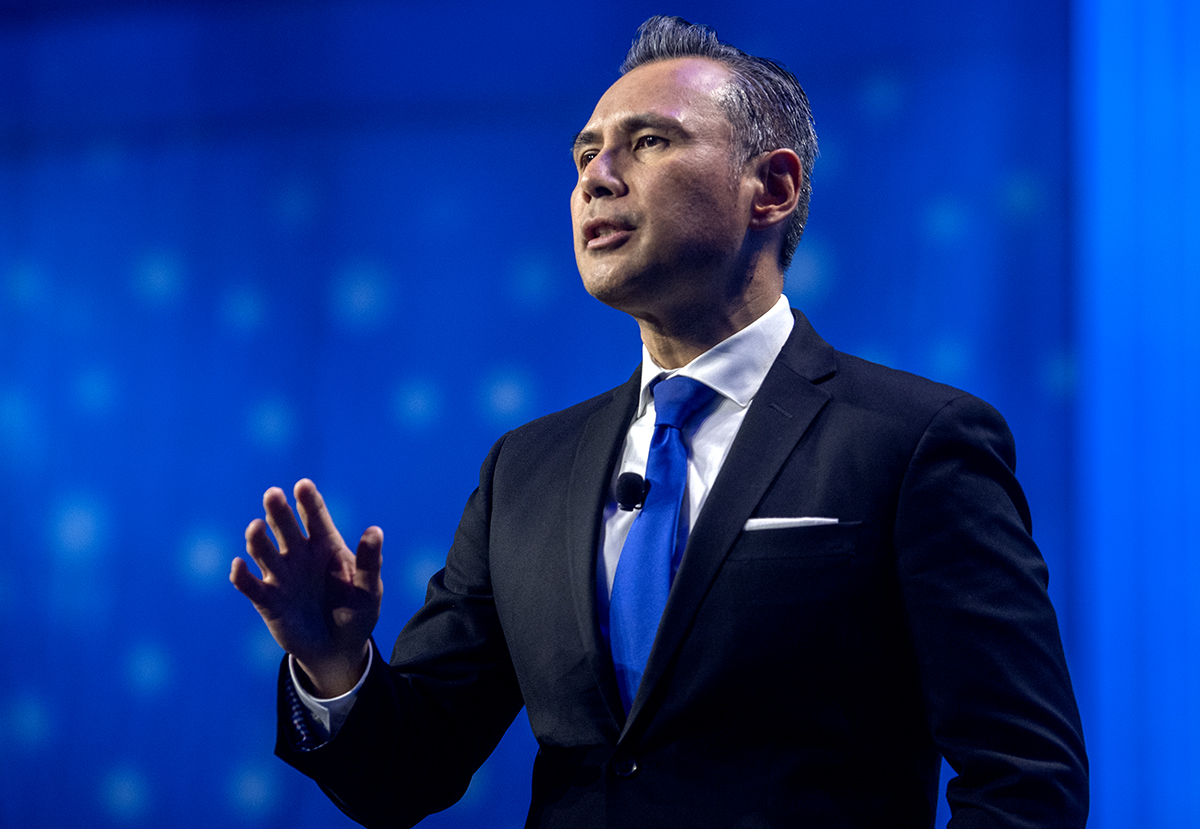
The Port of Long Beach, straining at its seams after decades of growth, is looking to 2026 to move at least another 9 million cargo containers despite headwinds from federal tariffs as it embarks on a complicated $3.2 billion plan for wharf, road and rail construction that officials say is paramount to their ultimate goal of doubling cargo volume by 2050.
In his first State of the Port address Thursday, CEO Noel Hacegaba — only 15 days into office — said he expects the nation’s second-largest seaport to at least achieve near last year’s figures, when it came within “striking distance” of 10 million Twenty-foot Equivalent Units, the standard measurement for cargo.
The forecast comes after an extraordinary year for the port, which saw the volume of cargo handled through Long Beach reach 9.9 million TEUs — a 3.1% bump from the previous year and the busiest year on record.
Underscoring the seaport’s partial emergence from the shadow of Los Angeles, Hacegaba added that in the first four months of 2025, Long Beach was the busiest of any port in the nation. LA ended the year at 10.2 million TEUs, making it the nation’s busiest for the 23rd year in a row.
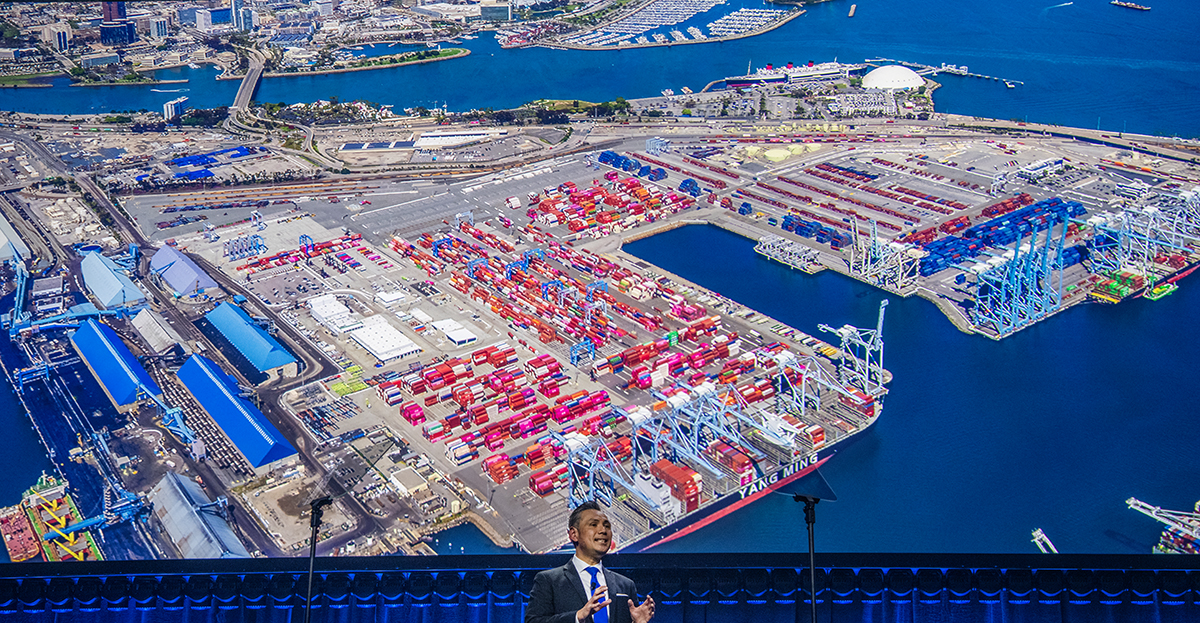
The two ports together account for about half of all U.S. imports, contributing an estimated $300 billion to the national gross domestic product, $84.5 billion in regional tax revenue, and supporting more than a million jobs statewide.
It follows a strong decade, during which cargo spiked 40% since 2015, with consecutive gains every year except 2022 and 2023.
That includes a record 4.8 million TEUs in imports. Furniture, auto parts, solar cells and kitchenware remain the top commodities freighted into Long Beach, while most of the more than a million TEUs leaving are filled with petroleum coke, recyclables, animal feed and soybeans.
In the next 10 years, the port plans to spend $3.2 billion to renovate aging terminals, expand its rail yard and construct new wharves to make room for a flow of annual cargo that Hacegaba wants to double in the next 25 years.
Plans include the $365 million construction of a unified wharf at Pier G, used by the International Transportation Service, which will add 19 acres of land by filling in a water slip and thereby allow operators to berth larger ships.
The project, which broke ground in July, is expected to be completed in 2028.
Hacegaba also touched on the $1.8 billion expansion of their rail yard, which, once completed in 2032, will double its acreage and triple its annual cargo capacity, which also reduces the amount of trucks crisscrossing the nearby freeways that besmog surrounding neighborhoods.
The year should also bring $53 million in improvements to upgrade harbor-area streets.
In general, the port is expecting another good year, Hacegaba said. That is the case despite uncertainty over the Trump administration’s plans to maintain or raise federal tariffs on overseas goods.
Last spring, President Donald Trump raised the taxes that the U.S. charged on imports to levels not seen in a century. He imposed a 145% tariff on Chinese goods, but later lowered it to a minimum levy of 30%. Chinese products constitute 60% of all incoming cargo at the Port, Hacegaba said.
Initial assessments saw a drop in the number of docked vessels and a rise in blank sailings — or canceled ships — that some officials at the time projected to result in 400,000 fewer containers entering through the ports.
“Preparing for the future has never been more important and, at the same time, more complex. But, seasons of change also open the door to new possibilities,” Hacegaba said.
While the import taxes have raised prices and hurt businesses, their effect on the ports is not quite as damaging as expected.
Officials at a port tour on Wednesday minimized it, saying cargo volume dipped in the second fiscal quarter but returned to normal by the summer.

When asked, they opined that anything from exemptions for certain countries and industries, rates that were lowered by the time goods arrived in the U.S. and possible evasion of the rules together softened the blow.
Experts analyzing the government’s tariff revenue and the value of imports have found the actual U.S. tariff rate to be around 14% as of last fall — about half the tariff rate that the administration had officially announced.
Others simply shifted trade patterns to southern Asian countries like Vietnam, Thailand and Cambodia, which pay slightly lower tariffs.
Hacegaba gave an example. As exports of U.S. soybeans to China dropped 95% in 2025, more and more shipments found their way to Indonesia, with 8,000 more containers sent there last year compared to 2024.
That said, they are keeping an anxious eye on Washington, D.C., where the U.S. Supreme Court is still mulling a decision on the legality of the tariffs.
The Trump administration this week also threatened 25% tariffs on any nations that trade with Iran, which include China, India and Turkey, as the president considers his response to the country’s deadly crackdown on protests.
China is Iran’s largest trading partner and buys 90% of the country’s oil.
“The only certainty is more uncertainty,” Hacegaba said.