

Learn more about what El Niño means for Long Beach and how you can be prepared at LBPost.com/elnino. Support useful community-centered reporting like this with a donation.
In a moment of Darwinian serendipity, sea turtles made the rare decision last week to lay eggs on a stretch of beachfront in Seal Beach and Huntington Beach — the first time ever recorded anywhere on the American West Coast.
Too bad the timing couldn’t be any worse.
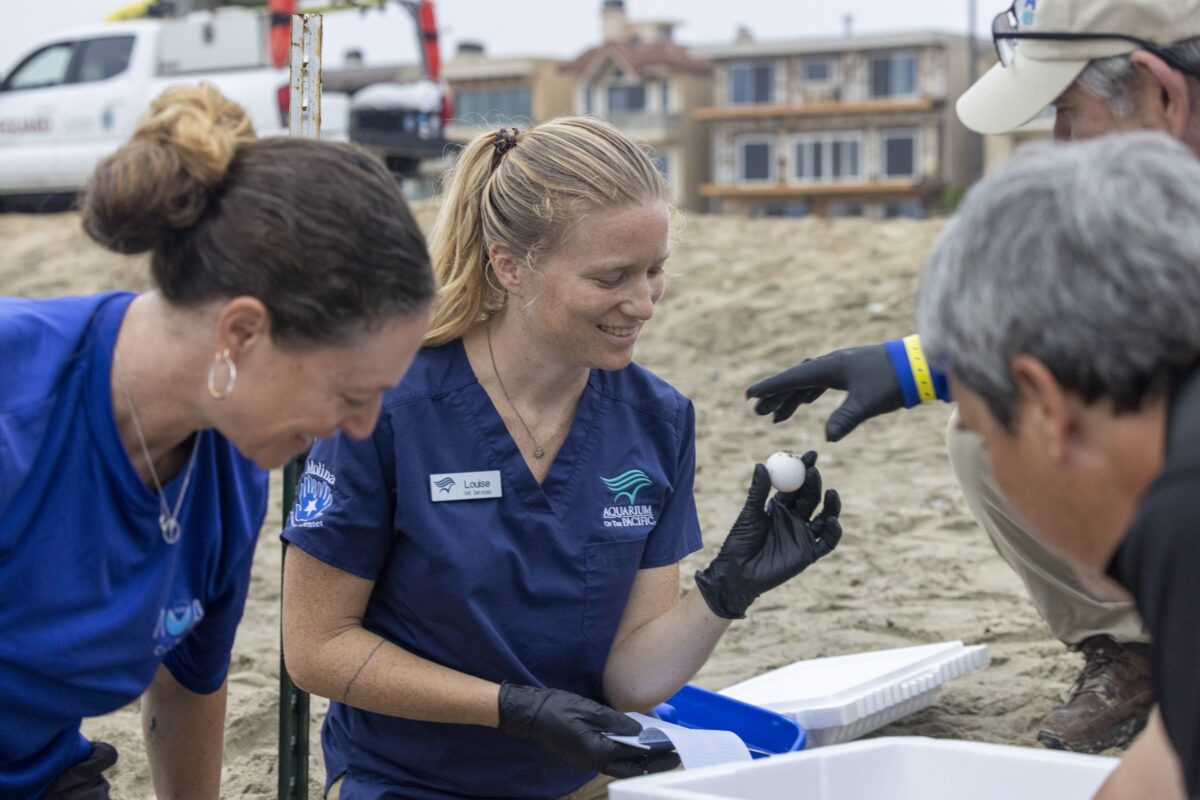
Marine veterinarians hit the beaches Friday to orchestrate a delicate evacuation of roughly 200 sea turtle eggs just as crews are bracing for powerful waves supercharged by Hurricane Polo.
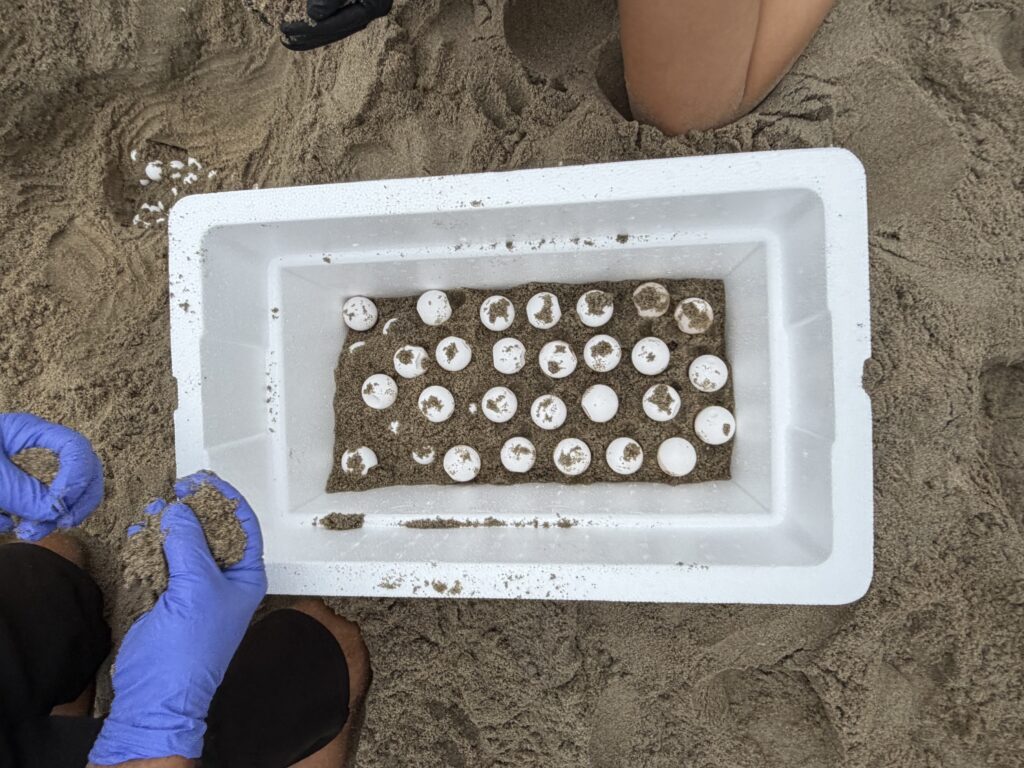
Eggs have been taken inside the Molina Animal Care Center at the Aquarium of the Pacific.
Aquarium officials say the first nest appeared near Seal Beach on Sept. 16, and three days later a second turtle — possibly the same one — laid eggs a few miles away near the Huntington Beach pier.
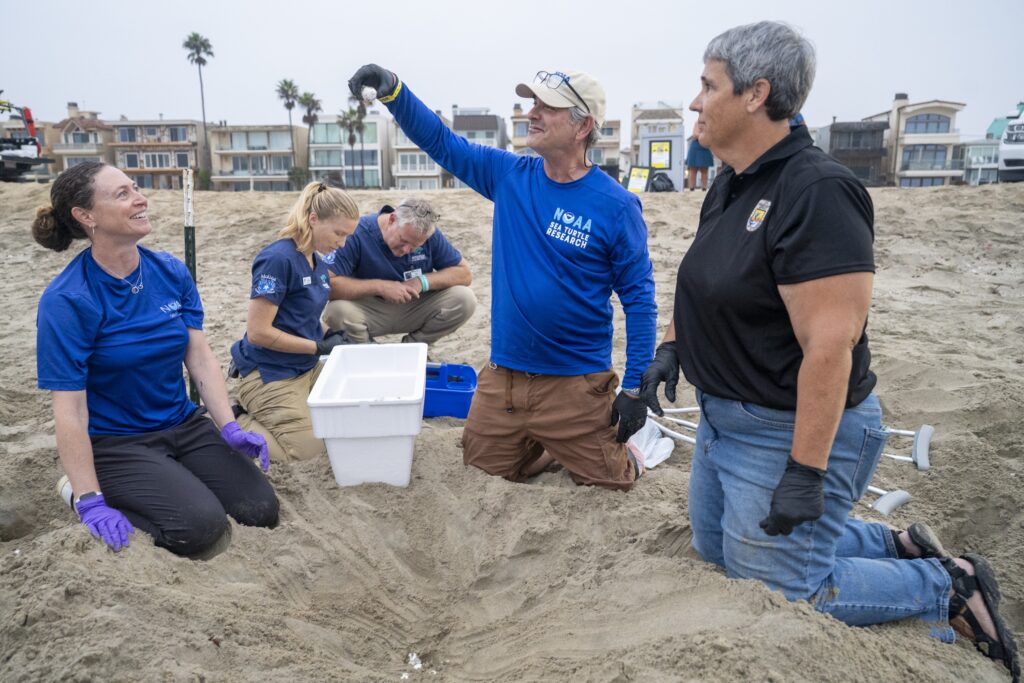
The eggs belong to olive ridley sea turtles, a species that experts say had never nested anywhere on the West Coast before, at least not until last week. The eggs will spend the next 45 to 60 days in the care center’s private quarters, away from public view and inside temperature-controlled containers meant to replicate conditions of a sandy nest.
If they hatch — likely around early November — the aquarium plans to return the hatchlings to the same beaches where their mothers dug their nests, so the young turtles can make their own scramble across the sand into the Pacific.
Why the turtles chose this beach to drop their eggs remains a head-scratcher for experts. Olive ridleys are partial to warmer waters across the Pacific, Atlantic and Indian Oceans, with major nesting populations concentrated along the coasts of Mexico, Nicaragua, Costa Rica and Panama. The species, albeit endangered with declining numbers, is more likely to breed in Sonora than Seal Beach.
Current science would likely point to unusually warm waters charged by a developing super El Niño, expected to bring increased rains, waves and heat to the area starting late fall and into early spring. But scientists say currents, prey availability or simple navigational error could also have played a role.
“As animals adapt in unexpected ways to changes in their natural world, humans will need to adapt and make space to ensure endangered and threatened species are given a fighting chance,” said Jeff Flocken, the aquarium’s president and chief executive.
Should the eggs hatch and the hatchlings survive, these turtles could one day return as adults to nest on the same stretch of California shoreline, he said.
Officials are asking beachgoers to keep watch for any signs of turtles that may have nested nearby: tracks in the sand, a turtle in distress, or crawl marks leading from the surf.
If you see any of these, you can call the West Coast Sea Turtle Stranding Hotline at 562-506-4315. For more information about the aquarium’s sea turtle conservation work, visit their website here.