

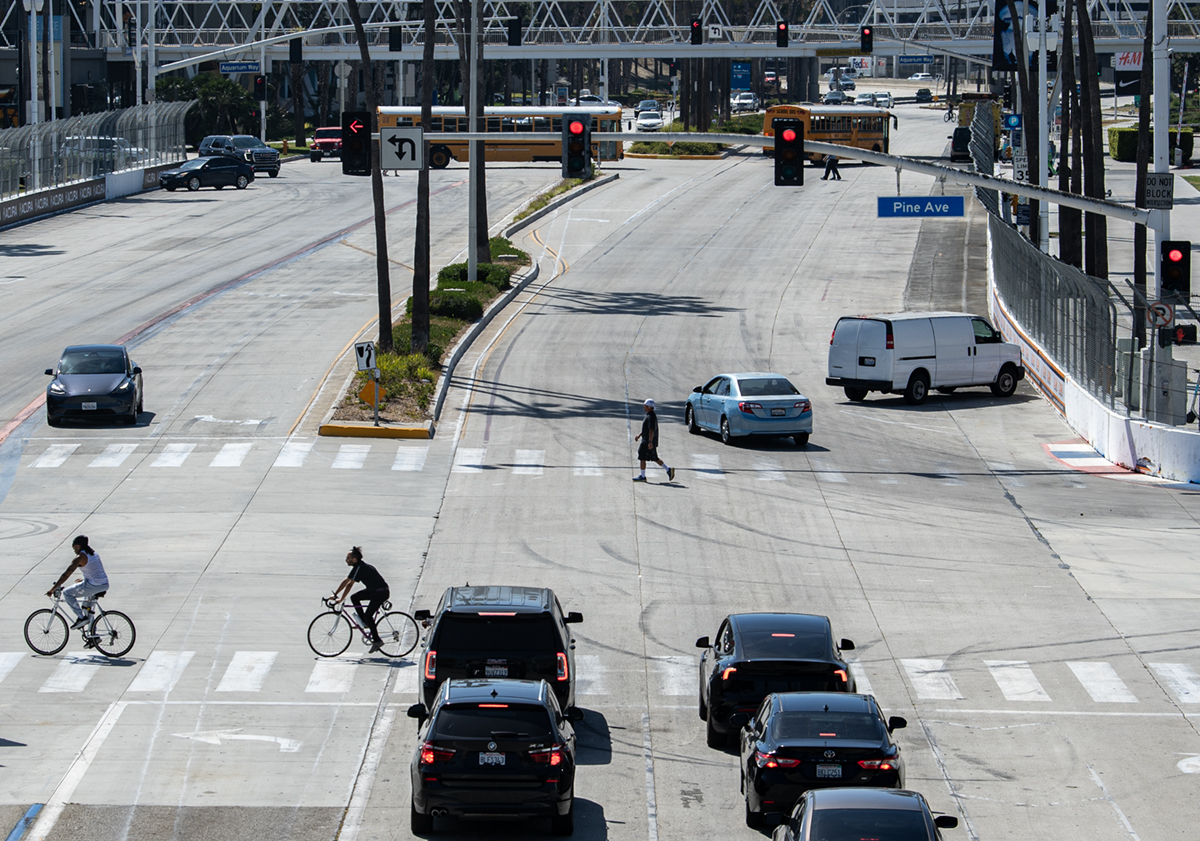
Not too long ago, Long Beach mom Stephanie Ramos decided she had to ban her two kids from riding their bikes alone. It’s too dangerous, she realized after seeing cars continually blow through a red light while turning at a busy intersection near her home, often ignoring pedestrians in the crosswalk.
Drivers seemed to realize there was little to no consequence for it, so she recently took matters into her own hands and pulled out her phone to video them at Studebaker and Anaheim Road.
“I look crazy,” Ramos said, but drivers who saw her filming started being more careful.
Just the threat of being caught seemed to be a deterrent. It’s a threat, Ramos and other neighbors across the city say, that has dwindled in recent years. And the data show they’re right.
Long Beach police are writing far fewer tickets to drivers who run red lights than they used to, according to an analysis of thousands of citations the Long Beach Post obtained through public records requests.
Long Beach does not have a means to track exactly how many drivers run red lights in the city, but it’s clear that traffic enforcement plummeted during the pandemic and never recovered. LBPD officers last year, for instance, wrote 627 red light tickets, less than half of the 1,559 such citations in 2019.
Over the same time frame, officers also handed out fewer speeding tickets.
(Long Beach isn’t alone in its slipping traffic enforcement. Signal Hill police, for example, gave out 1,328 red light citations in 2019 — less than 300 off Long Beach’s total despite being a fraction of the size — but that number dipped to 316 citations last year.)
Long Beach police say they don’t have as much time to crack down on bad drivers as they used to. Their ranks have thinned from more than 800 officers down to the high 600s, and they’ve been focused on dealing with shootings and other violent crimes.
The emphasis on combating gun crime has paid off, said Deputy Chief Mike Solomita, driving down the number of killings and shootings, but at the same time, traffic deaths have risen.
Last year, the number of pedestrians killed by cars (32) outpaced murders (29). And the total number of fatal crashes, 53, hit the highest point in at least a decade. The spike has left some residents feeling like they’re fending for themselves on increasingly dangerous streets.
Intersections have become “a little bit of a wild west type of thing,” said dog walker Jo Stanford. She said she now teaches canines and their owners “defensive walking.”
Those include making eye contact with drivers before entering a crosswalk, trying to always cross at corners with high visibility and walking with dogs trailing behind her to protect them from drivers eager to make a right turn.
“I’ve put a lot of safety protocols in place over the years just based on the experiences I’ve had,” she said.
Longtime resident Troy Diack said he no longer trusts other drivers to stop since he was T-boned while pulling into an intersection in 2022. Now, whenever a light turns green, he waits a beat before hitting the gas. And when he’s rolling up to a red light and it turns green, he still slows down before entering the intersection “to the annoyance of the other drivers,” Diack said.
It’s worth it, he said, to avoid being hit again. The last crash, he said, left him with three broken ribs, $60,000 in medical bills and a lingering fear that’s kept him from teaching his 6-year-old son to ride a bike.
What’s being done
LBPD is pushing hard to refill its ranks. Early this year, it opened up a new police academy, which is currently hosting its largest recruitment class to date — 98 prospective officers. Getting them and other new recruits onto the force could give officers more time for traffic enforcement if it’s deemed a priority.
In the meantime, Solomita said, current patrol officers should “understand the nuances of each one of the geographic areas that they patrol,” and manage hotspots for bad crashes or traffic violations.
In addition, the department says it’s been coaching drivers and pedestrians on ways to stay safe. For instance, “At nighttime, we ask, we implore, pedestrians to wear even bright colors,” Solomita said.
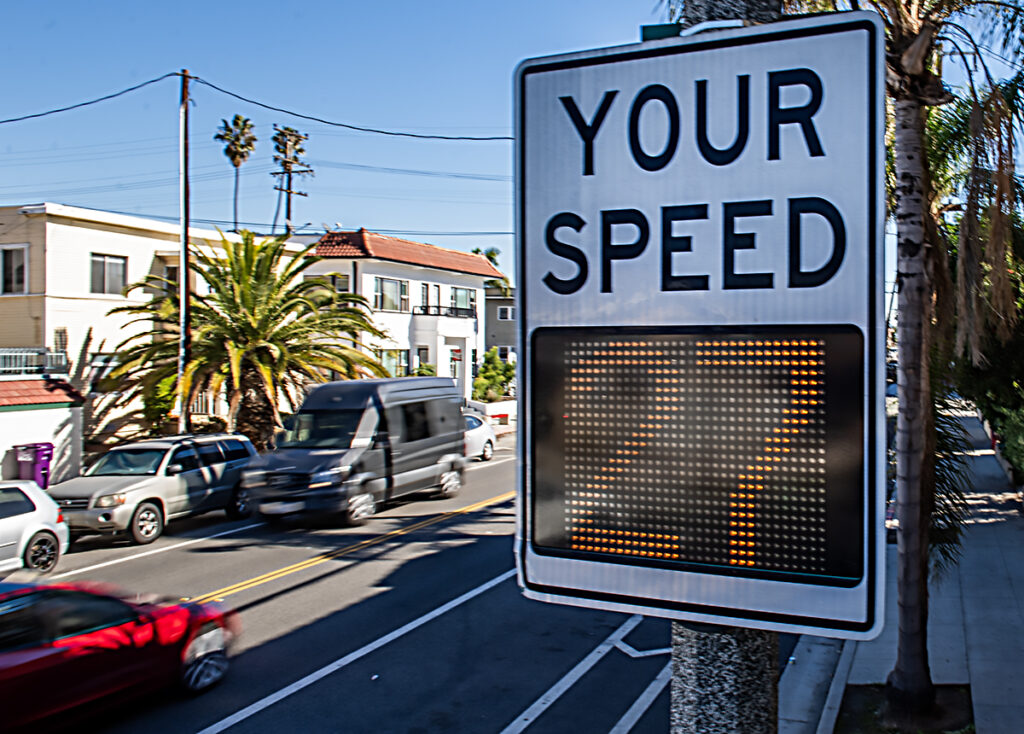
Long Beach also plans to deploy speed cameras at 18 spots throughout the city this fall. City officials are hopeful they can slow drivers down, and the ticket revenue they bring in can pay for smaller safety improvements on neighborhood streets.
There are no immediate plans for red-light cameras, but the city’s Public Works department does install other measures at intersections “to improve driver awareness and compliance,” Jocelin Padilla, a spokesperson for the department, wrote in an email. Those include adjusting the timing of traffic lights to give cars more time to clear the intersection and improving lighting at intersections.
There are also plans to install left-turn lights at a handful of intersections throughout the city over the next few months, which is one of the costliest fixes the city has in its toolbag, Traffic Engineer Paul Van Dyk previously told the Post.
Pressure remains to do more. City Council members, residents and Van Dyk have all said they want a faster pace toward fewer deaths, but that so far hasn’t happened. The number of fatal crashes this year is so far on pace to eclipse 2025.