

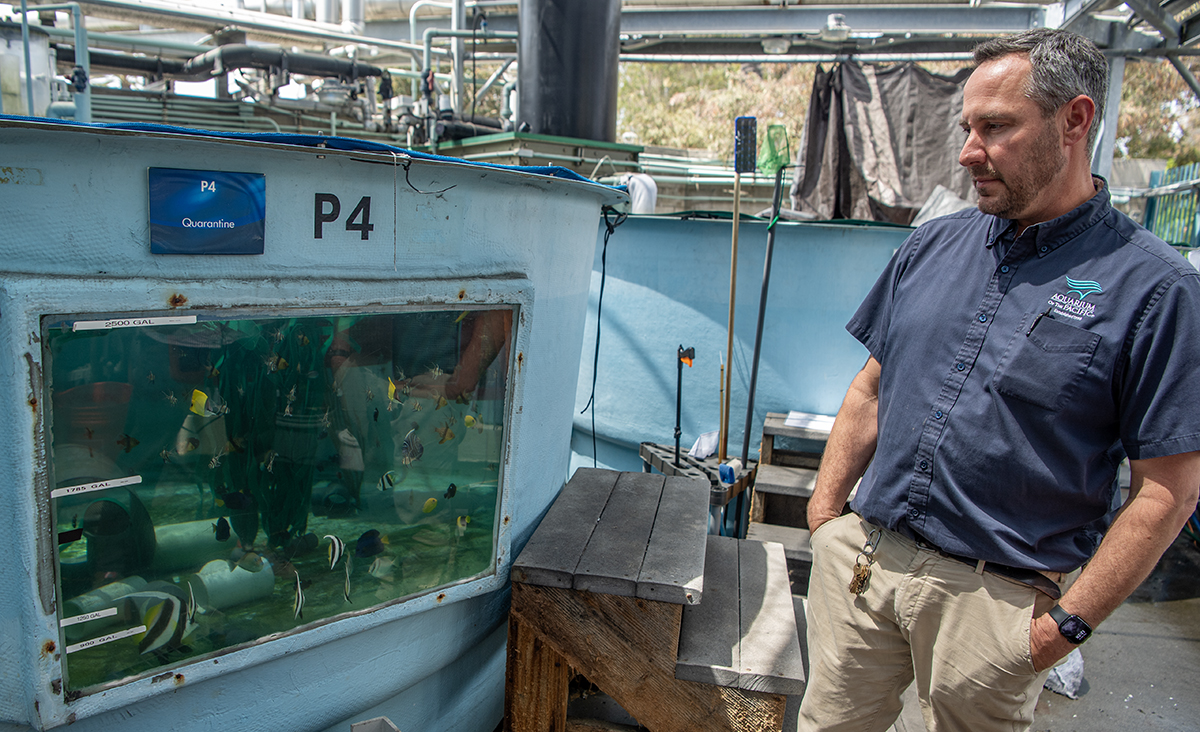
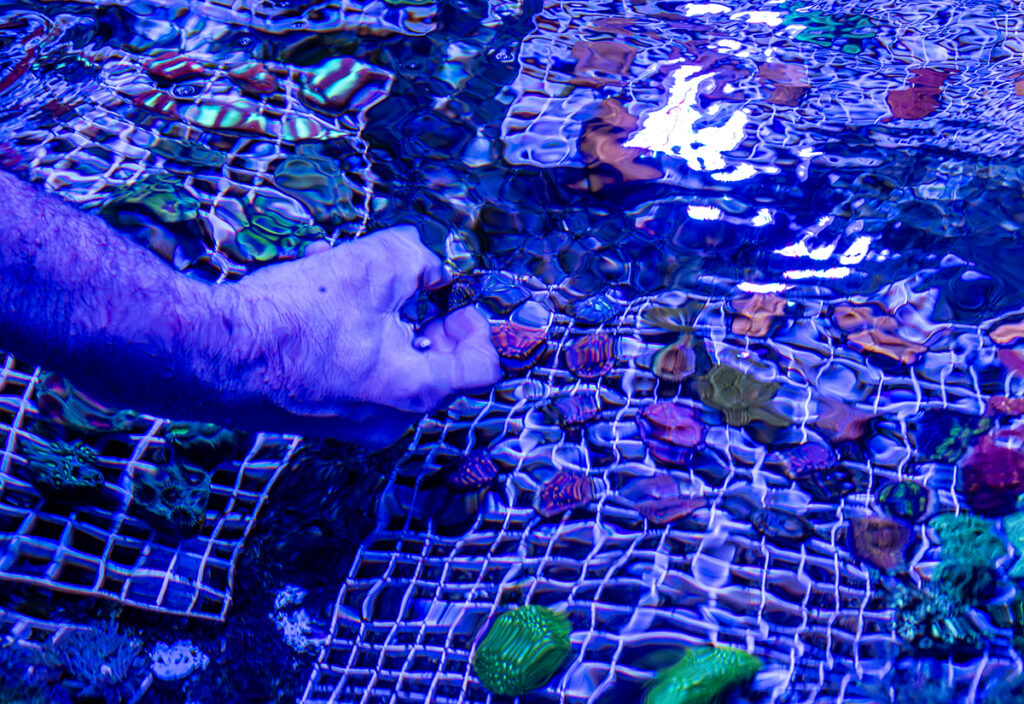
Clownfish clamber around a watery enclosure, a couple of brownbanded bamboo sharks weave between rocks and lines of coral sit in tanks basking under artificial grow lights — all creatures seized from illegal wildlife trafficking and placed at the Aquarium of the Pacific for care and a home.
The Long Beach aquarium took in nearly 1,000 trafficked marine animals over the course of two operations this summer, in which wildlife officials each time intercepted a box truck carrying thousands of confiscated creatures.
Nate Jaros, vice president of animal care at the aquarium, said this is one of the largest hauls the aquarium has handled in years.
The first operation, in June, led authorities to a box truck carrying some 2,000 animals, a mix of reptiles, fish and invertebrates that were being smuggled for sale on the black market.
Aquarium officials received some 500 marine animals from that operation on June 19, taking in an array of fish, sharks, clams, shrimp, prawns and tiny snails. The facility being understaffed that day, employees worked through the night to move the creatures into specialized quarantine areas where they tested their shipping water for pH, dissolved oxygen and ammonia levels — the byproducts of the animals’ waste — before slowly acclimating them to their new tanks.
About a quarter of the animals died either upon arrival or within days after, Jaros said.
“It’s just a very careful acclimation process,” Jaros said, adding it can take hours to get the chemistry just right. “We were working till about 1 a.m. There were four of us here, and we could have easily used three more people just kind of streamlining. … It’s a very stressful process.”
Another operation near the end of July brought another 300 marine animals to the aquarium after a brief stay at a federal wildlife center in Torrance.
The seizure was coordinated through the Association of Zoos and Aquariums’ Wildlife Confiscations Network, of which the Aquarium of the Pacific is a founding member. Since joining, the aquarium has taken in more than 3,300 trafficked animals, including axolotls, corals, reptiles and fish. Earlier this year, it received grant funding to expand and upgrade its holding systems in anticipation of future confiscations.
The network, launched in 2023 as a partnership between the U.S. Fish and Wildlife Service and the Association of Zoos and Aquariums, has sought to streamline the placement of animals seized in illegal trafficking so they can be sent to accredited facilities to rehabilitate and rehome the critters.
Southern California, considered an epicenter for trafficked wildlife, sees much of it moving through the region’s ports of entry from Asian countries. Monkeys, tigers, exotic birds destined for the pet trade or as trophies, reptiles and sea cucumbers prized for food and medicine all pass through the region’s airports and border crossings, according to officials with the network.
Without food or a change of water, animals often arrive in a weakened state, ripped from reefs in places like Indonesia, Fiji, Tonga, Australia or the Caribbean — before being packed by the hundreds into small bags of seawater for shipping, they often carry heavy parasite loads that worsen under the stress of captivity.
“These animals are likely from the reef, and that means that all animals that live in nature have some level of parasites,” Jaros said. “And when you bring them into a stressful environment, those parasite loads can start to increase. So they’re kind of vulnerable in that regard. A lot of times, those fish are going to need medical treatment as well, to ensure that we can rid them of parasites that are also compromising their health.”
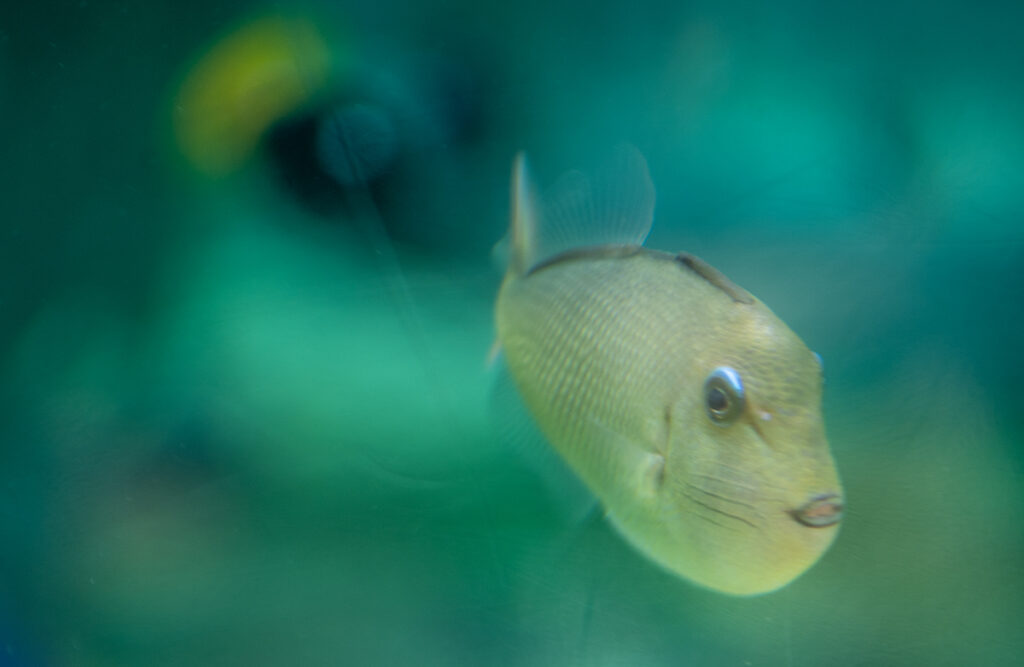
Among the species rescued were brownbanded bamboo sharks, listed as near threatened by the International Union for Conservation of Nature; Banggai cardinalfish, which are endangered; and ocellaris clownfish, one of the most heavily traded species in the pet industry.
Coral made up a significant share of the intake, and identifying it can be painstaking. “There’s thousands of species. They’re difficult to identify. Some of the cases need a microscope to identify them,” Jaros said, noting the aquarium takes in hundreds of confiscated corals every year arriving via air freight through Los Angeles International Airport.
Given the nature of how these federal anti-trafficking operations are conducted, aquarium officials say they know very little about how these animals got here or where they were headed.
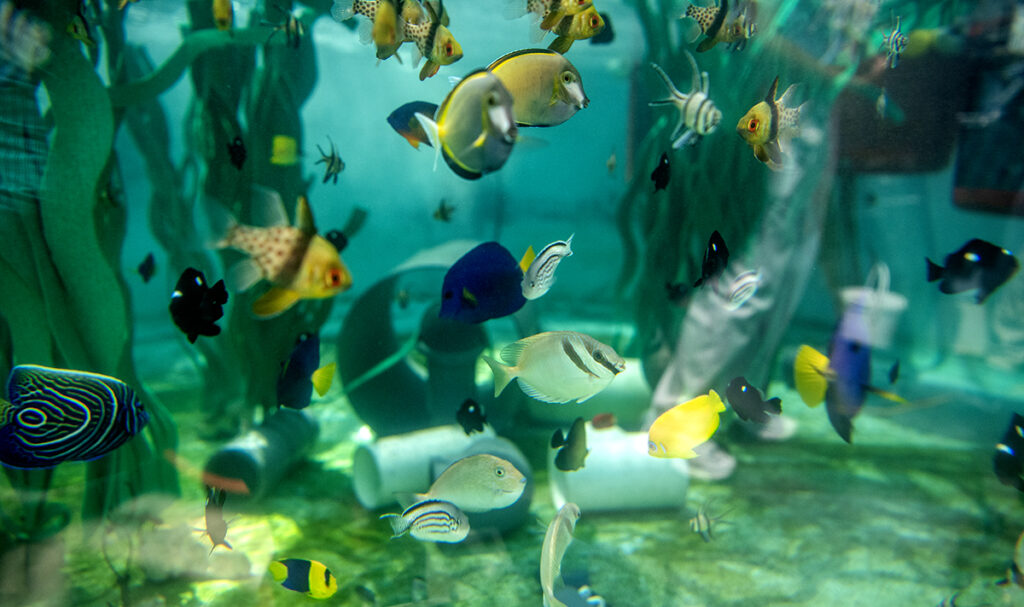
Past a large gate and down a path lined by corrugated metal pipes, many of the fish explore their new home inside two 2,500-gallon tanks covered with a tied-down tarp. More than 40 species swim about in the water. There were yellow longnose butterflyfish, domino damselfish, lemonpeel angelfish, clownfish and powder blue tang.
Between a school of banghai cardinalfish, a single juvenile emperor angelfish cut through — its deep blue scales segmented by white, vein-looking striations. Jaros said this one is still young, and that by the time it’s an adult it’ll be an entirely different-looking fish, yellow and blue striped. That adulthood, unfortunately, must be spent inside a tank like this one.
Experts say these animals cannot return to the wild. Introducing a fish foreign to the region could bring diseases into the water. The fish, having been medicated by this point, would have weakened immune systems unable to protect them against parasites.
Most are instead forced to live inside aquariums or rehabilitation centers for the rest of their lives. Some must also be housed and cared for as evidence — either until charges against a defendant are dismissed or the animals are permanently seized by the government.
Jaros said the aquarium has already found homes for a large share of the animals and expects to send them to other accredited facilities within about two weeks; others will be acclimated into Long Beach’s own exhibits. Which animals stay and which go depends on each species’ size and lifespan, and whether they can coexist with — or might prey on — other fish in the exhibits.
There are at least six Association of Zoos and Aquariums-accredited aquariums in California that can take part in that placement network.
“Wildlife trafficking disrupts national and global ecosystems and puts animals on the path to extinction,” said Jeff Flocken, the aquarium’s president and chief executive. “We are proud to answer the call to help trafficked wildlife.”