

This story was originally published by CalMatters. Sign up for their newsletters.
When Californians voted to reduce drug penalties in 2014, it likely had the unintended consequence of also increasing homelessness in the state, according to a new report.
The report, released Thursday by the Public Policy Institute of California, set out to measure the long-term effects of Proposition 47 – a 2014 ballot measure that lowered some drug and property crimes from felonies to misdemeanors. It found that while the measure succeeded in reducing prison overcrowding as intended, it also appears to have contributed to an increase in people living on the street, a rise in overdoses and a drop in the number of people getting drug treatment.
The PPIC researchers determined Prop. 47 likely led to an estimated increase in street homelessness of about 10% between 2015 and 2019. The study suggests the measure increased drug use (as measured by overdose deaths and hospitalizations) by between 7% and 8%. The researchers also found evidence that Prop. 47 led to a 20% reduction in the number of Californians receiving drug treatment, because the courts referred fewer people into treatment programs.
The results come at a time when many Californians are disillusioned with the state’s past efforts to reduce incarceration. Voters overwhelmingly passed Proposition 36 in 2024, which partially undid the 2014 reform by increasing penalties for certain drug and theft crimes. Supporters argued the 2024 measure would reduce drug use and homelessness, though it came with no funding for treatment or housing.
“Ever since Prop. 47 was passed in 2014, there’s been a lot of critics of that particular reform,” said Magnus Lofstrom, the PPIC report’s lead author. “It’s important to have a sense of what are those potential impacts.”
This appears to be the first study to show a direct link between Prop. 47 and homelessness. The findings are sure to add fuel to an already raging debate over the causes and best ways to fight homelessness: with proponents of a tough-on-crime approach on one side arguing addiction is a primary driver of homelessness and police should crack down on drug use and encampments, and homeless advocates on the other arguing the state’s sky-high cost of living is to blame and building more housing is the answer.
The report was met with skepticism by some experts in the field. Ron Hochbuam, a law professor at the University of the Pacific and director of the Buccola Family Homeless Advocacy Clinic, said while the researchers may have found a correlation between Prop. 47 and an increase in homelessness, saying the two were directly linked appears to be a stretch.
“I think it is more likely that two phenomena happened at the same time,” he said.
The study also failed to consider the adverse effects being charged with a drug felony can have on someone’s ability to get out of homelessness, he said. That criminal charge could prevent someone from getting a job or being eligible for subsidized housing.
California counties that reduced their homeless count this year told CalMatters that increased funding for temporary and permanent housing placements was the reason. That was echoed in the PPIC study: Places with larger increases in permanent housing beds also saw larger decreases in homelessness after the COVID-19 pandemic, suggesting that the money California poured into homeless housing after the pandemic is working.
Studies have shown the “housing first” model, which prioritizes placing people into housing as quickly as possible without requiring them to first become sober or get mental health treatment, to be an effective way to solve homelessness.
A 2023 report by the UCSF Benioff Homelessness and Housing Initiative found that while more than a third of homeless respondents reported regularly using drugs, that was not the driving factor of most people’s homelessness. Instead, a loss of income was the most common reason people reported for losing their last housing.
“We know that what drives rates of homelessness in communities are housing costs, but more specifically, the availability of housing for the lowest-income communities,” said Dr. Margot Kushel, director of the UCSF Benioff Homelessness and Housing Initiative and the lead author of the UCSF study.
That study, which was the largest survey of unhoused Californians since the 1990s, is widely cited by policy makers, activists and homeless service providers. It found that 20% of people who regularly used drugs or drank heavily wanted treatment but couldn’t get it.
The state needs to create more treatment resources, not put more people in jail, Kushel said. Voluntary treatment is proven to work better than court-mandated treatment, she said, noting that the PPIC researchers didn’t look into how many of the people who received treatment under Prop. 47 actually stopped or reduced their substance use.
The PPIC researchers stopped far short of blaming the state’s entire homelessness crisis on prison reform.
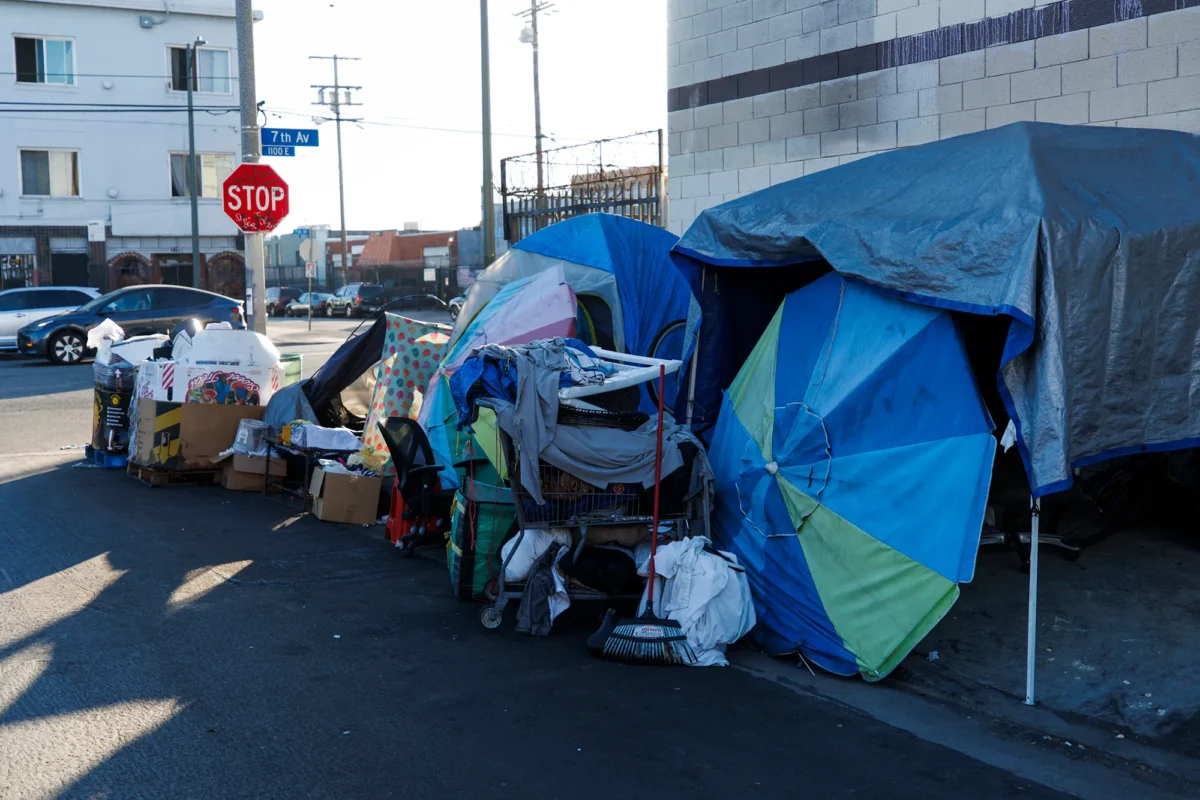
Prop. 47 likely resulted in an additional 7,000 Californians experiencing “unsheltered” homelessness (sleeping in parks, tent encampments, vehicles, abandoned buildings or other places not meant for habitation) between 2015 and 2019, the researchers estimated. That’s about 20% of the state’s overall increase in unsheltered homelessness during that time, according to the U.S. Department of Housing and Urban Development.
It’s unclear how much of that increase in homelessness is tied to increased drug use, and how much instead is because unhoused people who would have been sleeping in jail before Prop. 47 now are sleeping on the street instead. But Lofstrom suspects it’s a bit of both.
“Jails and prisons, they do serve as a source of shelter for people who are experiencing or are at risk of experiencing homelessness,” he said.
Kushel called that “horrifying.”
“I think we can all agree that criminal legal systems were not designed to be places for people to live,” she said. “That’s not their role. That’s not what they’re meant for.”
The PPIC researchers got their results by comparing California to other states that had very similar homelessness trends before Prop. 47 passed, and analyzing how California diverged from its peers after Prop. 47. The researchers also examined whether California counties that had large decreases in drug arrests and big drops in their jail and prison populations after Prop. 47 were more likely to experience larger increases in homelessness and overdoses – and found that they were.
The researchers acknowledged several factors that could have thrown off their calculations. In 2015, California, as did the rest of the country, tried to improve the accuracy of its homeless point-in-time counts – which may have resulted in more people being counted and contributed to a perceived increase in homelessness. In addition, rent prices increased much more in California between 2014 and 2019 than in other states. The researchers attempted to account for that difference in their calculations, but acknowledged that the outsized increase could have had more of an effect than their models show.
Though the researchers focused on the effect of Prop. 47 on homelessness, they found several other factors that played major roles. For example, in the areas they studied, the researchers found declines in the number of people receiving Social Security benefits correlated to increases in local homelessness.
While the PPIC report found that counties with higher rents and lower vacancies had higher rates of homelessness, changes in an area’s rents or vacancy rates did not lead to changes in their homelessness rates.
The researchers also noted that while prison populations decreased substantially during the COVID-19 pandemic, those decreases did not lead to an increase in homelessness and drug use. That’s likely because the state and federal government poured money into homelessness programs during that time period, which helped get people off the streets, Kushel said.