

Imagine a sprawling network of roomy bike lanes, generously landscaped to calm relentless traffic. Think Amsterdam with newer buildings and fewer waterways. That’s been Long Beach’s goal anyway.
Instead of wide post-war boulevards, roads would become slower and leaner, transforming Long Beach into a top-five global cycling city, said former city traffic engineer Paul Van Dyk. “Some of that is tongue-in-cheek, but if you shoot for the moon you land in the stars.”
Long Beach has been working toward this vision since it adopted its bicycle master plan 25 years ago, now with mounting urgency as auto-related fatalities rise. The biggest project so far – the Studebaker Road Transformation Project – is bringing this vision to the doorstep of Studebaker Road residents.
It has drawn mixed reviews.
“The intent of the design is malicious — it’s immoral,” said Joey Schilling, who drives the road six days a week and wrote a social media post criticizing the project that drew almost 1,000 comments. ”It’s people who do not use the road trying to tell other people how to use the road.”
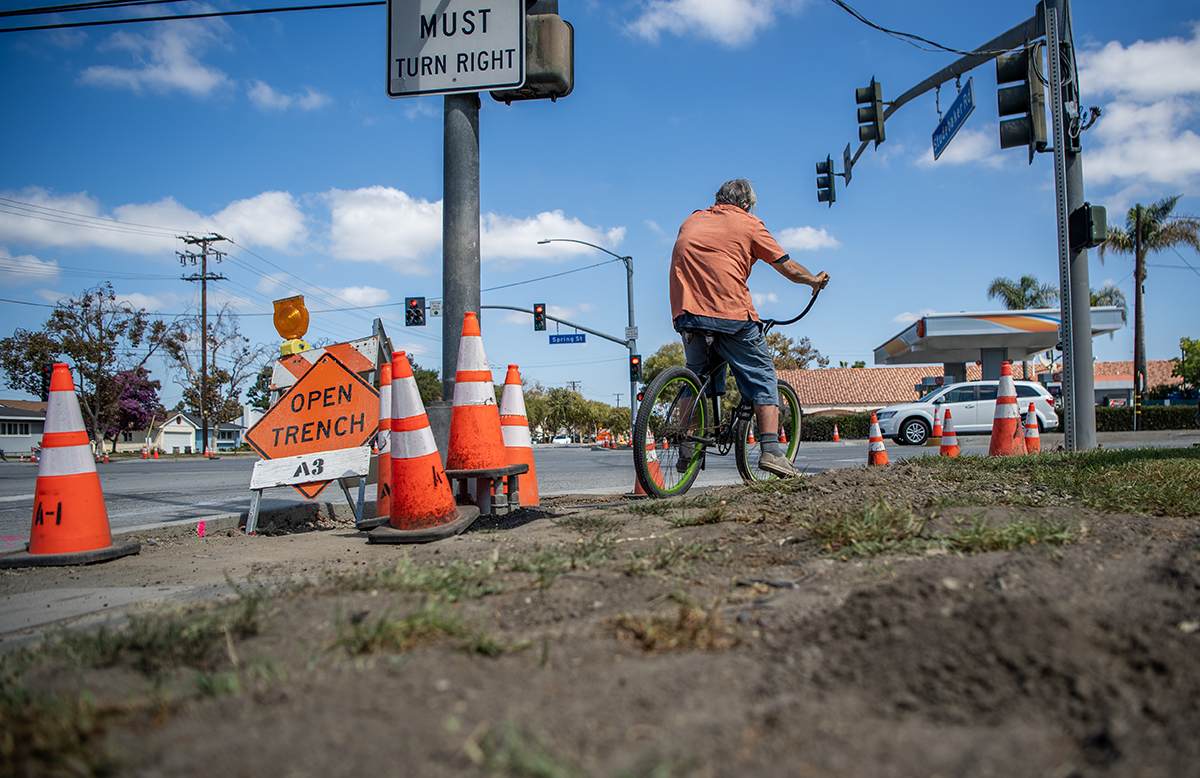
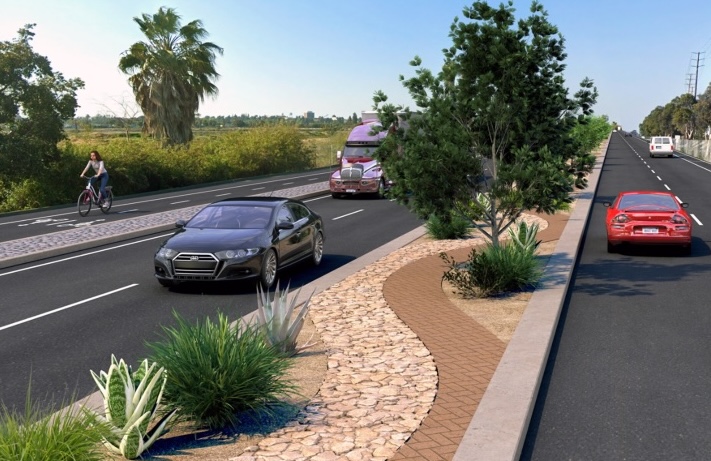
The $65 million project runs over five miles from Second Street all the way up to Carson Street. It includes bike lanes, greenways and stonescape with fiber-optic cable running underneath. It is crucial to the city’s long-term plan of knitting together 300 miles of bikeways by 2040 to bring bicycle culture to Long Beach, as well as create safer streets.
The massive project funded from 13 federal, state and local agencies, gives a glimpse of what’s to come for Long Beach thoroughfares. The Clark Avenue work is in progress. Pacific Avenue and Orange Avenue “backbone” plans are on deck. Now Studebaker Road, the biggest, longest and most expensive, is well underway, spending the most dollars and, arguably, drawing the most resident anger.
Schilling, who lives near Studebaker Road actually does ride his bike to work in Seal Beach and said he is OK with bike lanes in general. However, he says the project is not practical in a community where he says most drive to work. “It’s not a reasonable solution. It’s not even for the greater good, that would be to appease the 95 percent who use their cars. The cost and the benefit do not match up. The cost is too high, the benefit too low.”
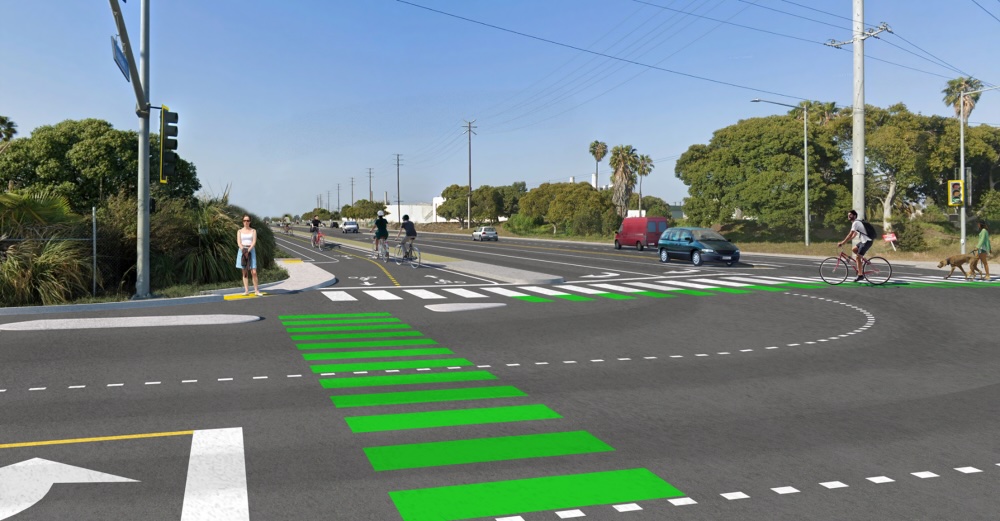
The Studebaker project features raised bus stops and wider bike lanes than have been seen previously. No more flimsy bollards separating bikes from cars, said Van Dyk, the city traffic engineer who helped usher in the bikeway and traffic-calming street plan before he went on to consult on other urban bike projects.
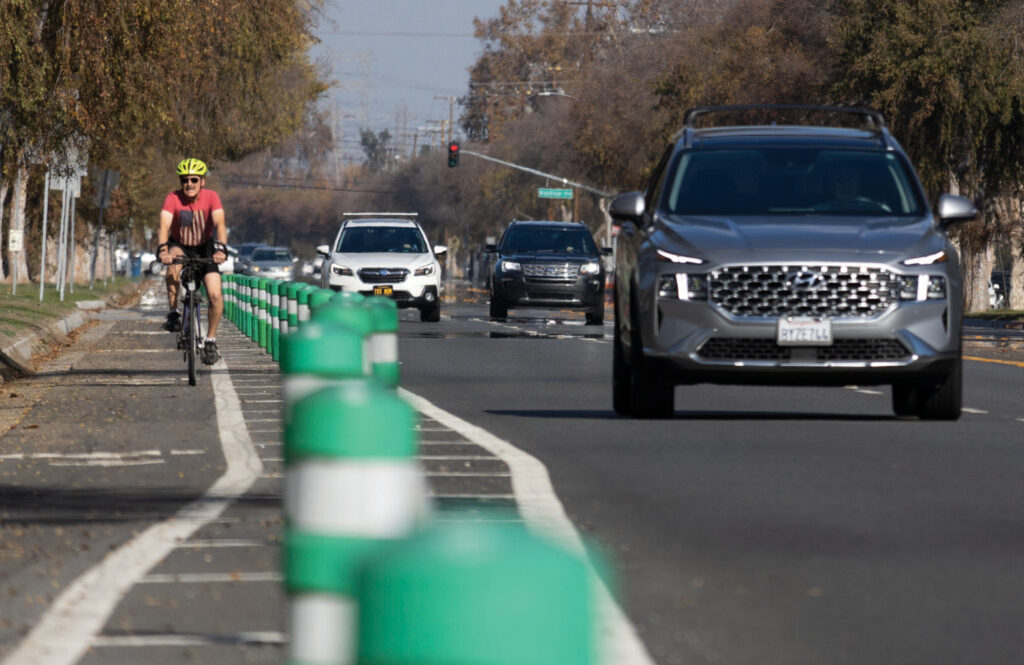
The green bollards seen on Bellflower Boulevard and Studebaker before the redo often get hit by cars and can resemble thick blades of stomped grass. “People do not like the way they look, and I agree with their frustrations,” said Van Dyk. “That’s why we moved towards those concrete medians.“ He said planners “learned a lot of lessons along the way.”
Studebaker will feature roomier bike lanes – 9 feet wide compared with the old 6-foot-across version. Wider lanes will allow riders to travel two abreast for a better ride, Van Dyk said. It also makes them easier to clean. Debris-filled lanes are a sore spot with bikers.
The old bike lane sweeper the city used to clean narrow paths was notoriously difficult to move and use. (Fourth District Councilmember Daryl Supernaw joked that sightings of the small sweepers were less frequent than Bigfoot.) But a regular street sweeper can get into the broader lanes where it can’t on Broadway and Bellflower south of Atherton. (They actually set a street sweeper in a bike lane before planning and pouring the concrete to make sure it would fit.) Still, protected bike lanes are harder to clean than lanes merely separated by paint and “swept” by passing cars.
David Raslevich, a 41-year-old cyclist who frequently rides on the new lanes on Clark, said he has noticed branches, leaves and other debris. “I feel safer riding with the traffic, because they (cars) move debris out of the way for you.”
One new component of Studebaker and the other newer lanes are raised bus stops. The new stops designed to accommodate bikes and buses are about five inches off the ground and separated from the road by a curb. Buses will stop in the No. 2 lane, halting traffic behind them, and pick up passengers, instead of easing out of a bus turnout.
Van Dyk said that change evolved from talks with Long Beach Transit, which revealed that buses would sometimes get hit when pulling into traffic. Planners reasoned it’s better to have cars waiting for a bus to pick up passengers instead of forcing a bus waiting to pull into the No. 2 lane.
“It’s math my second grader can do: What’s better, 40 people on a bus wait or four people in cars,” Van Dyke said. “Which is the greatest cost to society? The bus is going to be more efficient.” He also contends the new system is safe; there is less ambiguity as a bus will slow down in front of a car, so the car would be more likely to stop instead of zipping around a protruding bus bumper.
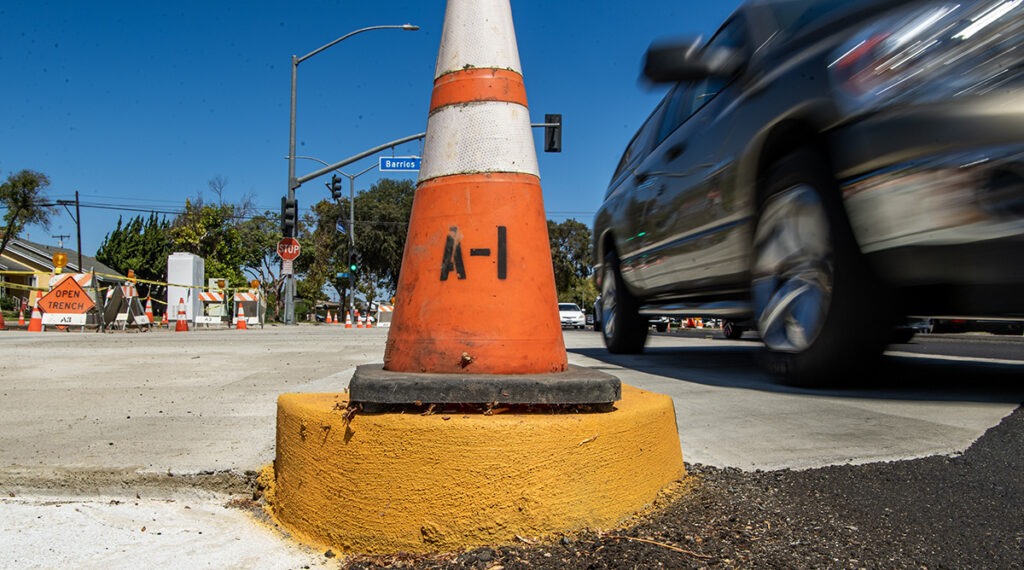
It is too early to know how this plan will play out – the new bus lane curbs on Clark show missing chunks already from drivers that likely didn’t see them. Raslevich said he has seen cars turn into the curb by the raised bus stop. “They don’t know that there’s an island there, so they’re hitting that island, pretty much daily.”
Councilman Supernaw, whose district encompasses the $65 million project, had reservations about the price tag before ultimately supporting it.
“All anyone asked for is a repave, to get rid of potholes and have a smooth surface to drive on,” Supernaw said. “Should we just forgo the bike lanes and do a straight repave? The answer was no, we wanna use the grant money for the bike lanes.”
The city saw it as a grander vision, weaving together a puzzle of state and federal grants along with $8.5 million in local sales tax money for new transit stops, sidewalks and curb ramps that improve how all people can move through the city.
“It’s not just ‘I wanna ride a bike for fun.’ People need it to get to work,” said Jocelin Padilla, a spokesperson for the city’s Public Works Department.
A series of community meetings were held in 2024, drawing limited feedback. But when residents later saw painted pavement markings showing the planned curbs and bike lines, “they got involved in a big way,” Supernaw said.
“We call this communication via spraypaint,” said Supernaw. “Constituents see lines marked out and contact the council office.”
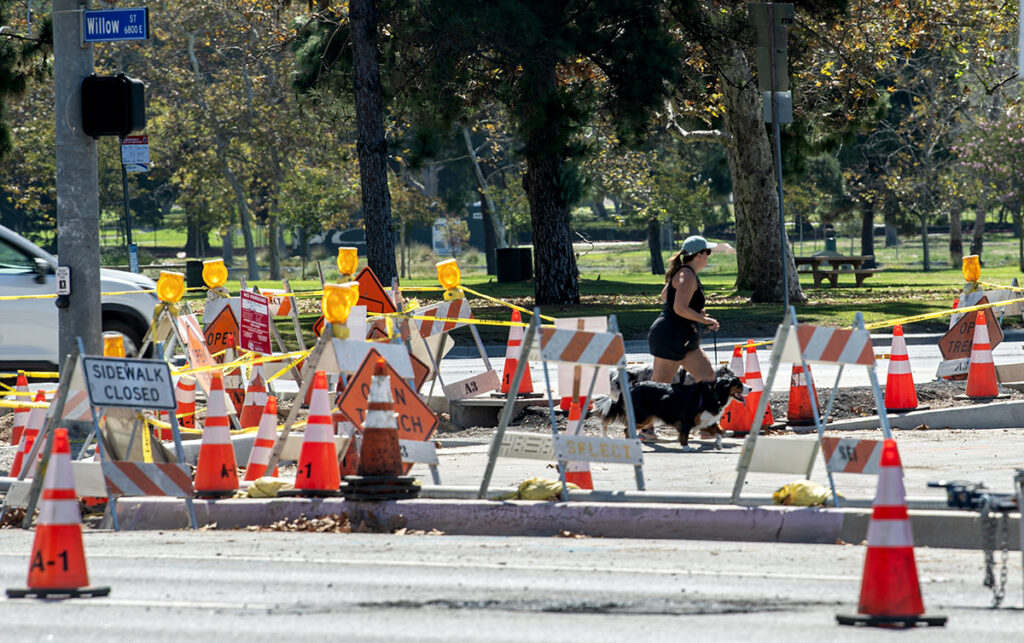
Aside from the cost and the bus islands, some residents are frustrated by the execution. Leslie Goldman, who lives near Studebaker and Stearns, said large piles of dirt – at times higher than cars – have blocked residents from crossing the street or seeing oncoming traffic. Some concerns were addressed, including a bus shelter that was added due to feedback from residents.
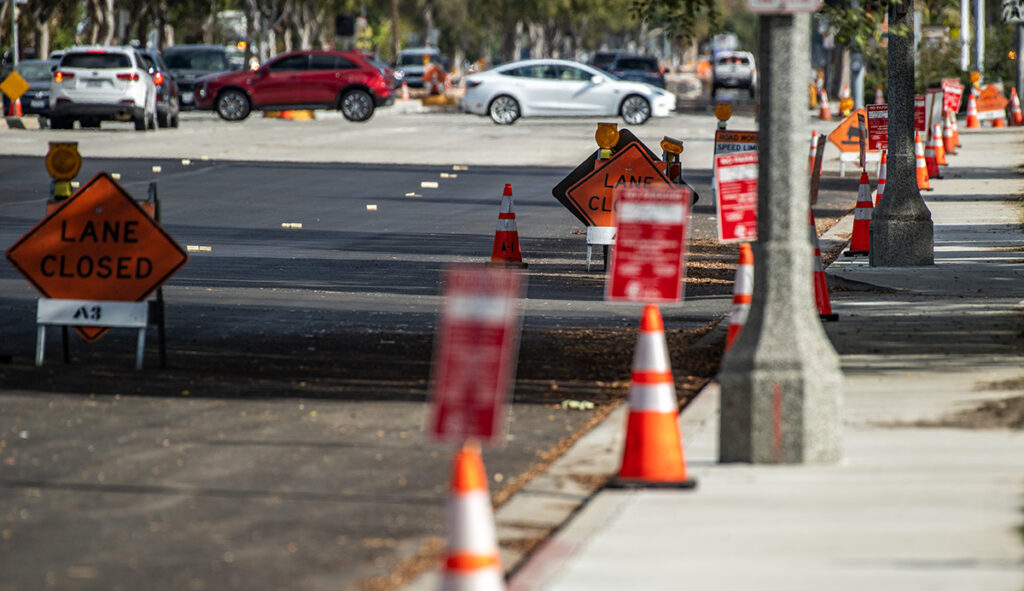
“We’re not saying we don’t want construction done ever, that’s life in the big city,” she said. But Goldman contends the “assembly line” construction approach, as opposed to the work done in shorter phases, is leading to more “noise, vibration, dust, traffic, blind spots, trash, roadblocks, … All at sporadic intervals unknown to residents. It’s not just an inconvenience, it’s a hardship.”
Padilla of Public Works acknowledged the hardship, but said the benefits would outweigh the short-term pain. She said doing the work in shorter segments would increase costs and project timelines – not a good thing when it needs to be finished by the Olympics. “This is a once-in-a-generation project,” she said.
Not all residents are wary. “Studebaker is gonna be awesome when it’s done,” said Dan Olsen, who lives near Studebaker and Atherton. “It’s new, it’s fresh, the neighborhood is going to benefit. It’s been a total pothole disaster for so long. … Even though there are catches and hooks, it’s still worth it.”
Long Beach is not yet Amsterdam; it’s still a patchwork of protected lanes and unprotected ones of varying degrees of newness. But Studebaker should be done in 2027. Pacific Avenue and Orange Avenue are next. The bike lanes and streets won’t uniformly connect, but there will be more of them – Artesia Boulevard to service Jordan High, Clark Avenue near Long Beach City College and now Studebaker. “Long Beach’s cycling network is reaching critical mass,” Van Dyk said.
Van Dyk and other bike proponents say it’s a long game. Amsterdam itself was car-dominated until the 1970s when the Stop de Kindermoord movement was launched in response to the high number of child deaths. “It’s a generational effort; it took multiple generations to give us the infrastructure we have today,” he said.
Will they help make transportation safer for cars and bikes? The city racked up 53 traffic deaths in 2025, the highest in a decade, and 32 bike/pedestrian and e-scooter deaths. This year has seen 36 traffic deaths through mid-September. The city is also trying other tools; speed cameras are being installed, and tickets will go out this fall.
It’s not yet any safer to ride through Long Beach than it was 10 years ago, “but it’s not safer to do anything in Long Beach,” said Kurt Canfield, a cyclist and organizer for Car Lite Long Beach, a bike advocacy organization. He often rides the Broadway bike path, which he considers a success despite debris in the lane and other issues.
“They wanna bike, they wanna walk, people are driving 300 horsepower crossovers. We’re in conflict for the same space,” he said. “But this infrastructure gives us the ability to be safer.”