
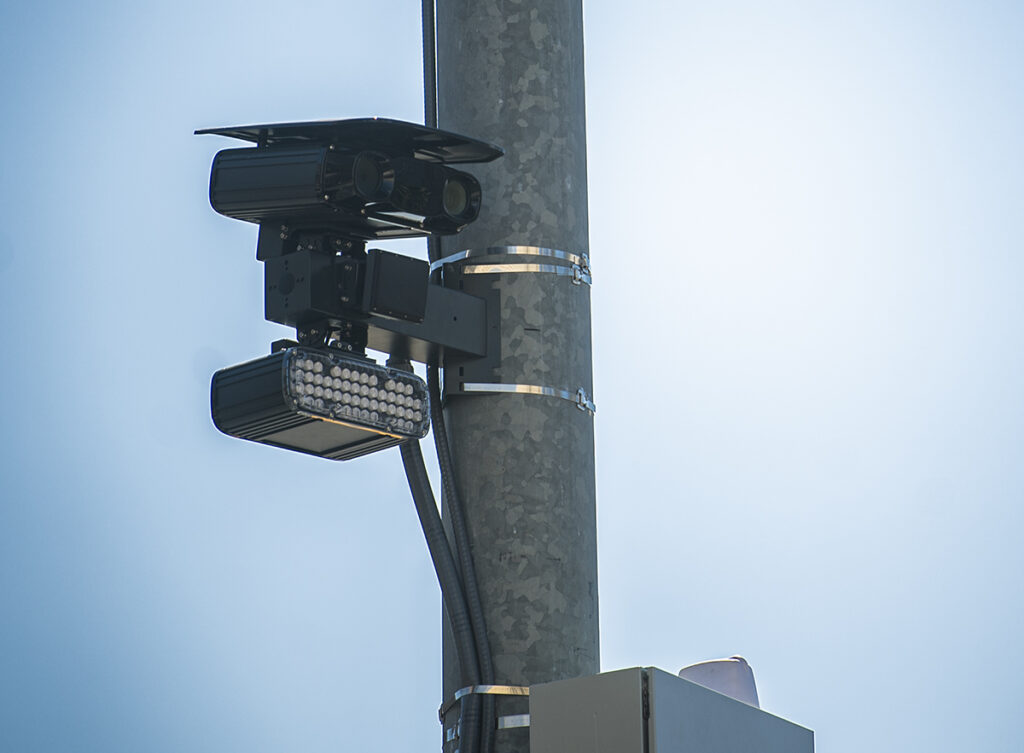
Long Beach’s speed cameras are now online at 18 locations throughout the city, and they’re here to stay until at least 2031. They started issuing warnings on Oct. 7, and they will start giving out tickets on Dec. 7.
It’s a big change. Many people have questions about how they work. Many others hope the cameras can finally slow down a stubborn surge in fatal crashes.
We want answers too. So, every Tuesday we’re going to update this page with our reporting on speed cameras and traffic safety. Updates could be big or small: Maybe we filed a public records request to find out how many tickets have been issued — maybe we wrapped up a major analysis of the worst intersections. Either way, we’ll bring you what we know.
Make sure you don’t miss any updates: Sign up for our Today’s Headlines newsletter at LBPost.com/newsletters.
If you have a burning question, email [email protected]. He might be able to find the answer.


Frequently asked questions
Where are the speed cameras?
The cameras are watching for speeding vehicles at 18 locations throughout Long Beach, with two in each City Council district.
Half of the cameras are on streets where deadly or severe crashes have occurred most often. The other half are in school zones or in areas where street racing is a problem.
How will the cameras work?
Tickets ranging from $50 to $500 start going out on Monday, Dec. 7. The cameras capture only the rear license plates of vehicles. Based on the license plate information, a citation is then sent to the car’s owner at the address where the car is registered.
If you don’t receive a warning during the 60-day warning period, then your first violation will be a warning instead of a citation.
Here’s how the cost of each ticket breaks down.
| Speed Over Limit | Fine Amount |
| 11–15 mph | $50 |
| 16–25 mph | $100 |
| 26+ mph | $200 |
| 100+ mph | $500 |
Payment is due within 30 days, but payment plans and diversion programs are available.
You can find more info on those here.
Where will the money go?
Long Beach officials estimate that citations will generate roughly $5 million in revenue in the first year, with half of that money going to cover the costs of administering the camera program.
The rest will pay for traffic-calming measures in neighborhoods where traffic studies have found they’re needed most. Those safety measures could include things like crosswalks, no-turn-on-red signs and speed humps.
The cameras are allowed as part of a state-approved pilot program that forbids the money from being spent on anything else.
Why does Long Beach have speed cameras?
Long Beach has been fighting a rising tide of deadly crashes in recent years. Last year saw the city’s highest total – 53 – in more than a decade. This year, there have been 41 fatal crashes, which is more than double the number of homicides.
Local officials see the cameras as part of the solution and lobbied for state authorization to install them under a pilot program. That program also authorizes them in Los Angeles, San Francisco, Oakland, Glendale, Malibu and San Jose.
Citations are already being issued in San Francisco and Oakland.
Long Beach also got approval to install two more speed cameras on Pacific Coast Highway next year thanks to another state bill.
What other questions do you want answers to? Email [email protected] to give us suggestions.