

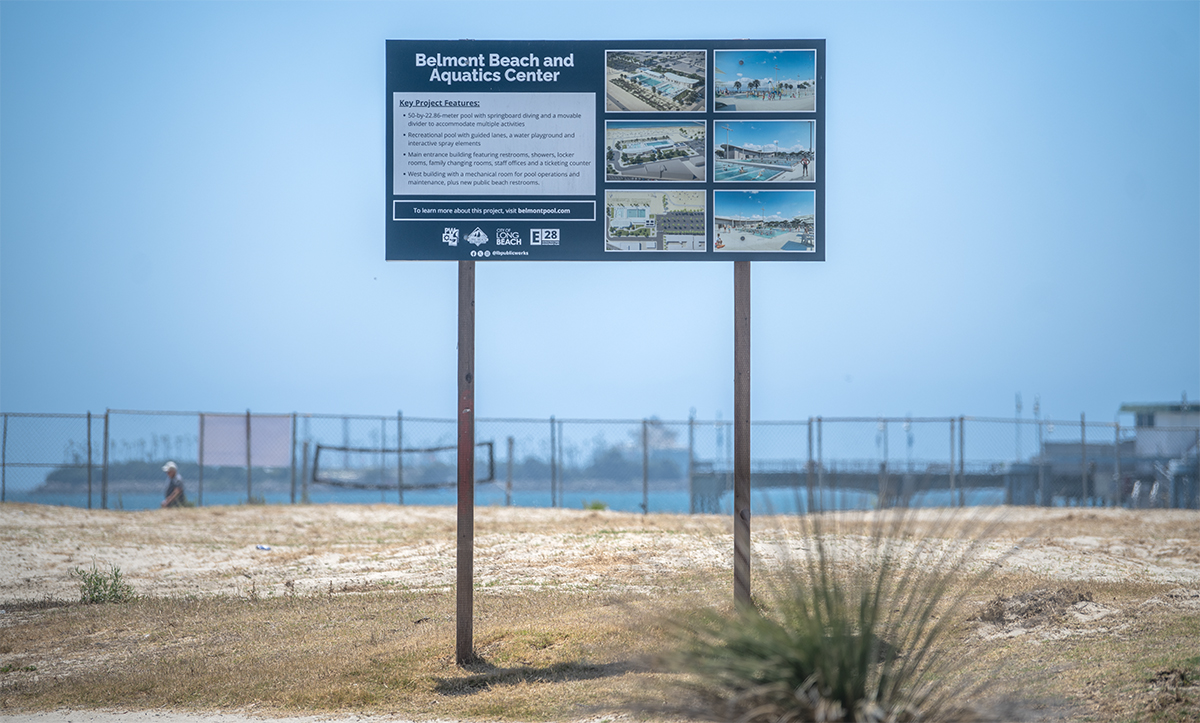
It took more than a decade of planning, revisions and false starts, but construction is underway on a new, $105 million shoreline pool that will serve as one of the city’s marquee infrastructure projects ahead of the 2028 Olympics.
A groundbreaking ceremony is planned for Saturday, but crews have been working at the site since last month, starting with the demolition of the adjacent kiddie pool to make space for building materials. They expect to finish construction by spring 2028, months before the games commence. While the pool itself will not be used for a specific event, several water-based competitions like open-water swimming, sailing and rowing will be hosted nearby.
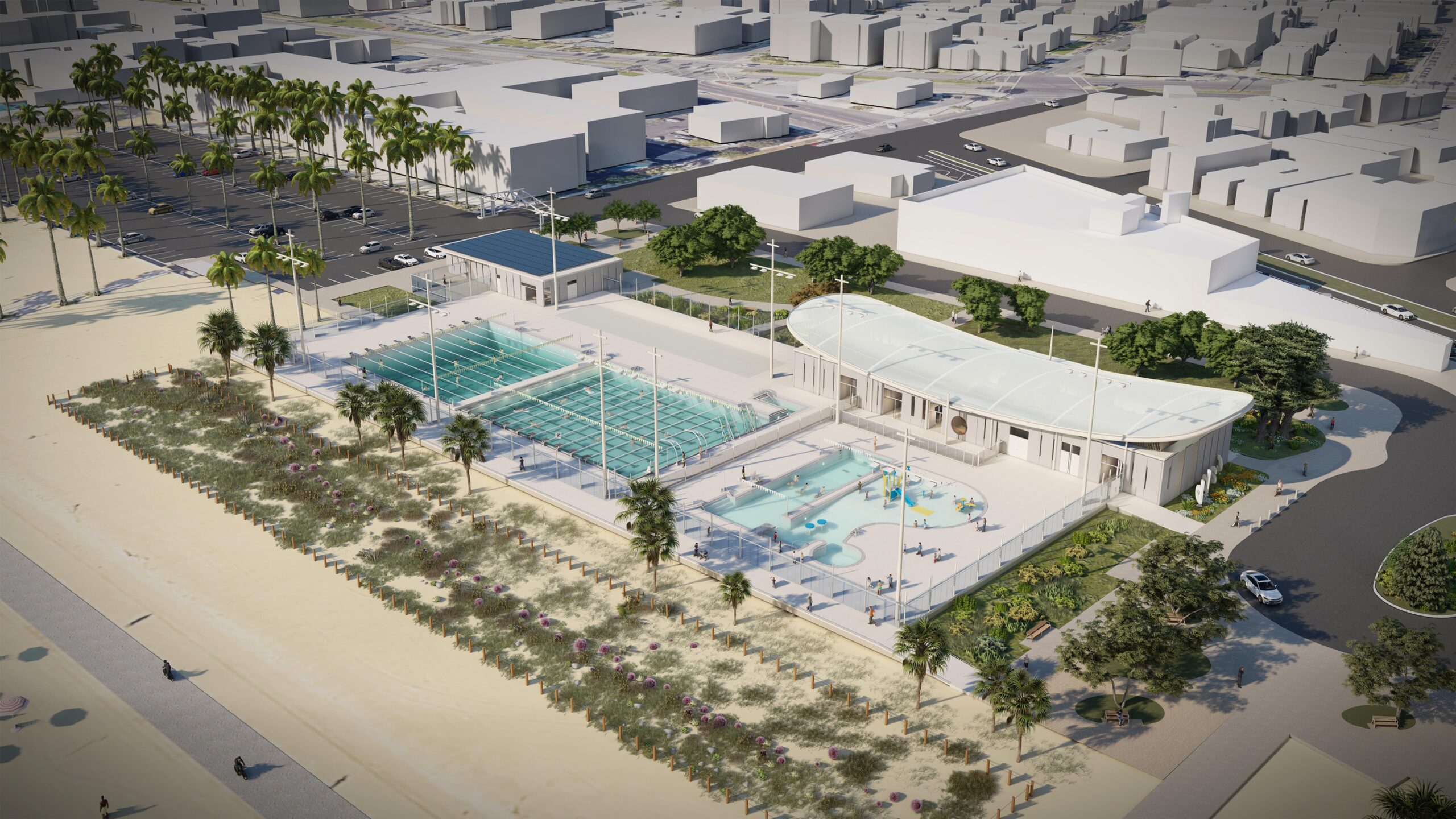
Once complete, the publicly funded center will include a 50-meter Olympic pool with spectator bleachers, a mobile bulkhead and four springboards. There will also be a shallow therapy and learning pool, spray zones and a multi-use building with lockers, offices and changing rooms.
“Breaking ground on the Belmont Plaza Pool marks a historic step forward in delivering a facility that reflects the pride, history and future of Long Beach,” Mayor Rex Richardson said in a statement.
The Long Beach City Council approved a $105 million spending plan for the pool in January.
Most of its budget, about $77 million, is funded through the city’s Tidelands Fund, which relies on oil revenue. Another $28 million will be covered, officials said, by sponsorship revenue, small-time grants and a $24.5 million bond they originally hoped to issue this summer.
To help pay back that debt, the city proposed in January to charge for parking at 1,800 spaces around the Alamitos Bay Marina that are currently free. If at least a fifth of those spaces — charged at $2 an hour — are filled at any given time, the meters would generate $3 million annually. The plan to issue bonds still needs approval from the City Council.
Officials previously said they would come back with a debt issuance plan in June, after scheduling public hearings to solicit feedback. But months later, several neighborhood groups, associations and members of the Long Beach Marine Advisory Commission say they’re still waiting for a meeting.
“Despite repeated requests, we’ve only been told we might get an update in the summer, which is puzzling since the project has already begun,” wrote Joan Palango, the executive vice president of the Long Beach Marina Boat Owners Association.
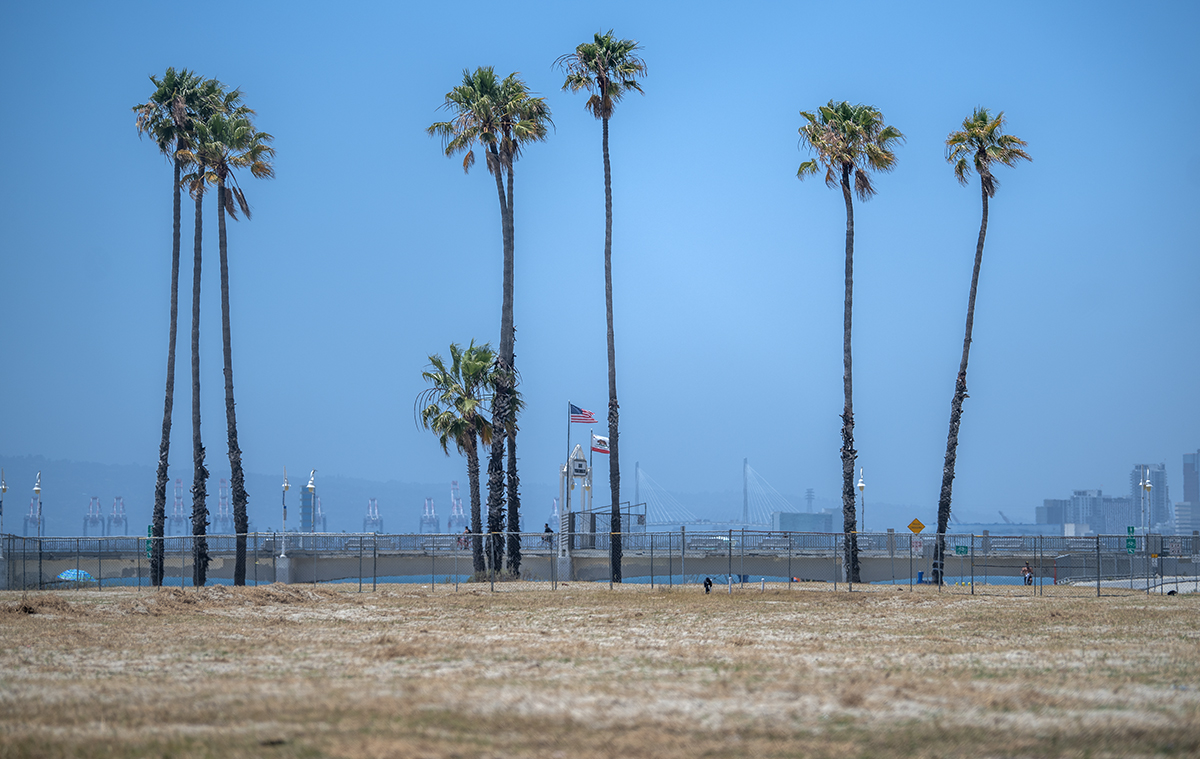
Long Beach has tried to start charging for those spaces before, saying it’s rare to find free beachfront parking in a city of its size. But the idea, last studied in 2022, was rejected by the Marine Advisory Commission the same year over concerns it would unfairly tax waterside patrons.
Jocelin Padilla, a spokesperson for Long Beach Public Works, said the city will start a parking study shortly after Memorial Day and through the summer that counts the number of cars that park along the marina and how frequently they turn over.
From there, Padilla said the plan is to host community engagement in the “late summer” and then put together a proposed parking management program that will be submitted to the Coastal Commission for permitting approval.
Joshua Smith, a spokesperson for the coastal commission, said a typical turnaround for permitting approval once it’s submitted can take about 47 days, depending on the current caseload.
The pool’s groundbreaking comes after 13 years of delays, backtracks and revisions to replace the temporary city pool that was installed in 2013 after its 45-year-old predecessor was deemed seismically unsafe. City planners say the temporary pool will remain at least through construction. Afterward, the city and Coastal Commission — which holds authority on seaside projects statewide — will decide whether to close it.

Previous plans for the new pool ranged in price between $60 million and $145 million. It was originally envisioned as a $119 million domed natatorium that was later pared down by rising costs, declining oil revenues, environmental challenges and mandates by the Coastal Commission.
Ahead of the groundbreaking, the project has already cost $23.2 million, largely for designs, redesigns, studies and permitting, including work from a dozen different consultants.