

This story was originally published by EdSource. Sign up for their daily newsletter.
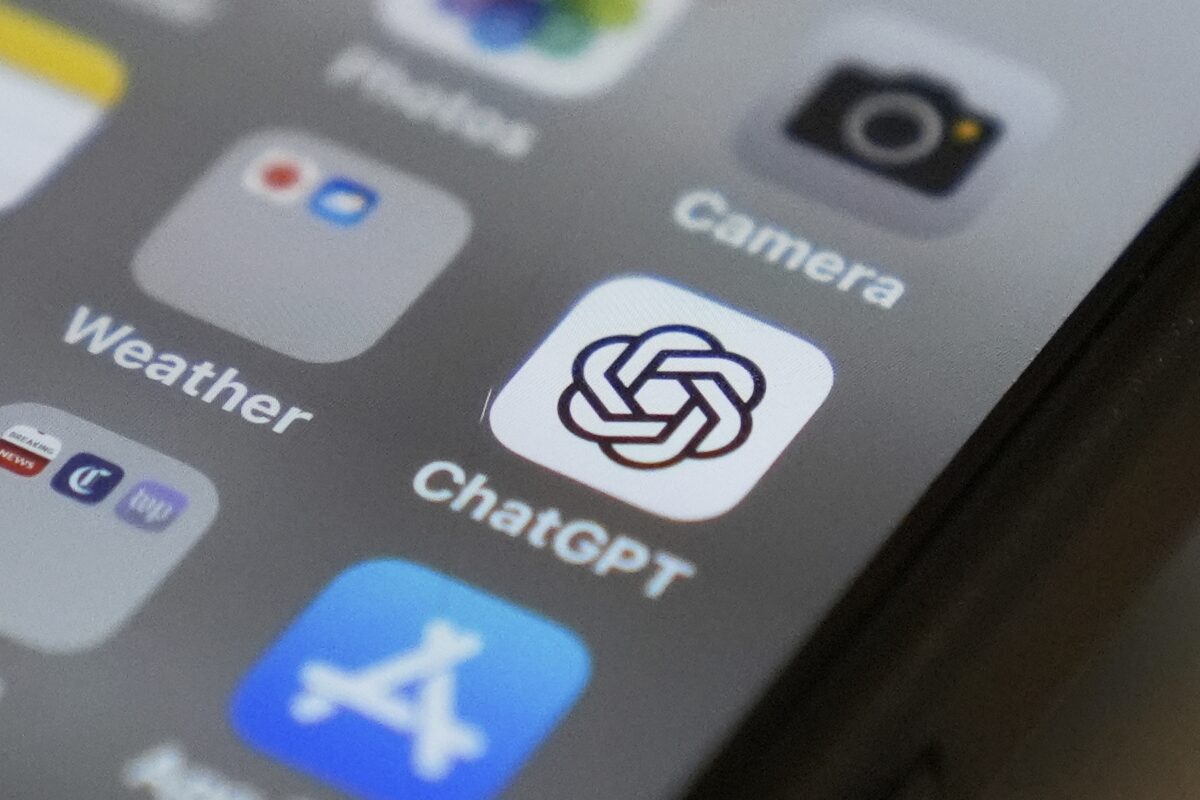
California State University officials have renewed their controversial contract with OpenAI — developer of ChatGPT — reigniting a fight over institutional priorities at a time when the system faces millions of dollars in budget cuts.
A CSU spokesperson confirmed to EdSource on Wednesday that the university will pay $13 million a year for three years to provide systemwide access to its more than 470,000 students and 63,000 faculty and staff. The previous 18-month subscription cost $17 million and expires at the end of June.
The CSU contract with OpenAI is the largest partnership the company has with a higher education institution. It is also the largest among others that the CSU has with tech companies, including Adobe, Google and IBM, as part of the system’s AI Initiative to make artificial intelligence tools available to students, faculty and staff.
But the announcement of the contract renewal, which faculty received on Tuesday, reopened debate about the cost of the agreement and the quality of ChatGPT Edu — a version of ChatGPT designed for higher education. In January, faculty delivered a petition to CSU leadership urging cancellation of the contract over concerns that ChatGPT Edu is “not designed, trained, or optimized for education.”
CSU officials, however, argue that the renewal follows an “ongoing and iterative process intended to balance innovation, risk management and educational outcomes.”
“We recognize that artificial intelligence is a topic that has sparked important debate and a wide range of perspectives,” a CSU spokesperson said in a statement, “and we take seriously the concerns expressed about the ethical and responsible use of AI. At the same time, the CSU has made significant progress expanding access to AI tools and training for nearly half a million students and more than 63,000 faculty and staff. We believe continuing that work is essential to preparing our students, faculty, and staff for the future.”
Faculty who oppose the contract said that they are specifically concerned about the use of chatbots like ChatGPT in education, not all artificial intelligence and machine learning tools. ChatGPT Edu is a commercial product, they say, was not designed by educators, and the results it provides cannot be completely trusted.
“If what we do in the university is create reliable evidence-based knowledge where we cite our sources, these general-purpose chatbots are not well suited to that task,” said Martha Kenney, professor of Women and Gender Studies at San Francisco State. “This technology is not right for the CSU at this budget moment.”
The CSU system faces $144 million in budget cuts, and a planned 5% funding increase was deferred from this year’s budget to 2027.
Some faculty argue that students benefit from the systemwide agreement. In an opinion piece, Chico State professors Nik Janos and Zach Justus wrote that without a subscription to ChatGPT, some students would be forced to use a free version, which has limitations, and that ChatGPT Edu provides crucial data security.
“Without a customized and secure product like ChatGPT Edu, students, faculty, staff and administrators will have less secure data and privacy,” they wrote. “This has huge implications for sensitive personal data, intellectual property and the crown jewels of university data.”
Other faculty expressed ethical concerns about the agreement between CSU and OpenAI. Citing lawsuits in California courts over claims that using ChatGPT has led to suicide or psychological harm, one professor said that the CSU may place itself in an “ambiguous legal position” by distributing the service to all students.
Martha Lincoln, a professor of anthropology at San Francisco State, said that the ChatGPT product is “suspected to be very dangerous to a percent of its users,” but that by providing the service the CSU system is implying that it is “fine and safe to use.”
Taiyo Inoue, a professor of math at Cal State Maritime, said the agreement between CSU and OpenAI provides privacy features that align with federal standards and gives the university the “opportunity to help shape the future of AI in education.”
“The very real concerns about hallucinations and mental health are precisely why we need faculty and institutions in the conversation, not standing outside it,” Inoue said.
Students have raised concerns about inconsistent policies related to AI use in the classroom. In a February response, the system’s AI Initiative, the Cal State Student Association wrote that “some professors encourage AI literacy while others penalize any perceived use of it, creating confusion, fear, and mistrust.”
In a Tuesday newsletter sent to faculty and staff, CSU Executive Vice Chancellor and Chief Financial Officer Patrick Lenz wrote that the system “will increase training opportunities and create clear, consistent and student-centered guidance on AI use, privacy and expectations so that faculty and students can use AI with confidence.”
A CSU spokesperson said Wednesday that the system had no further details about planned guidance available at this time.
A 2025 systemwide survey confirmed that ChatGPT is the most used AI tool across the system’s 22 campuses, but also found widespread concerns about the future impact of AI. Among all responding CSU students, 95% reported using an AI tool; 84% said they used ChatGPT and 82% worry that AI will negatively affect their future job security.
