

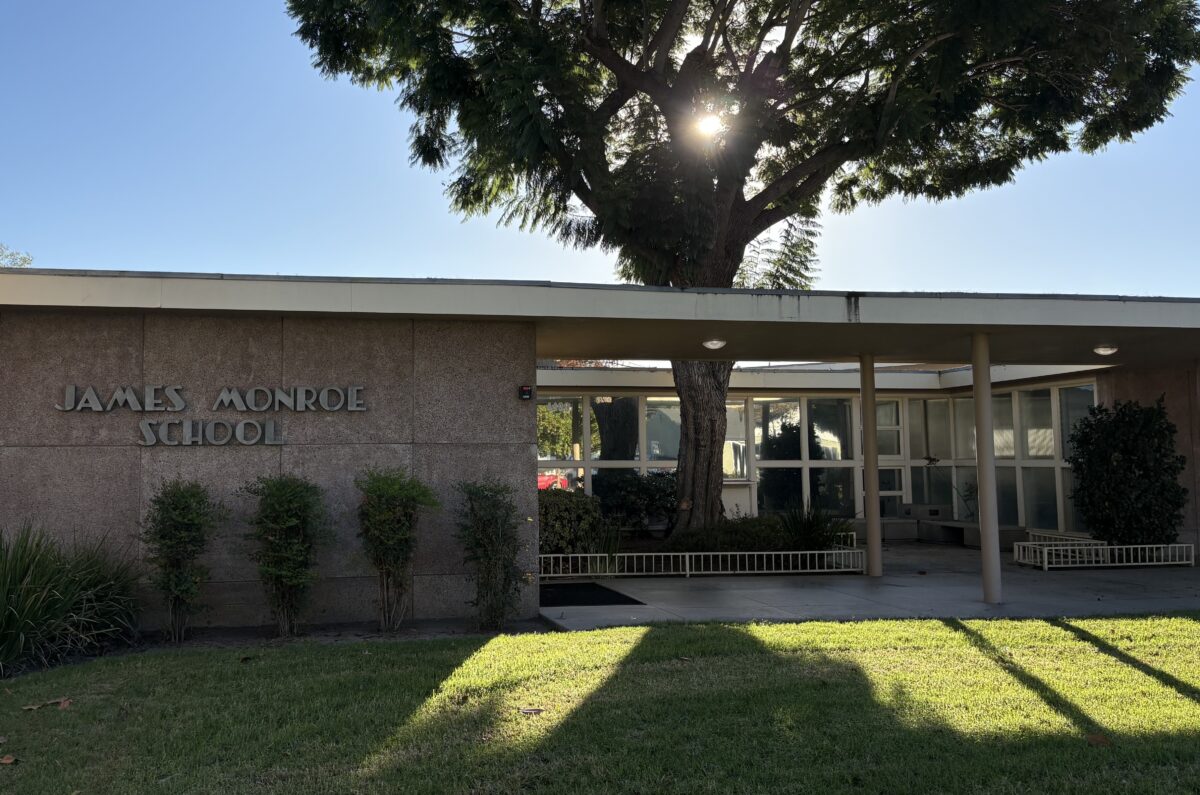
Long Beach Unified says it conducted two rounds of environmental testing and found nothing concerning in a Monroe Elementary School building where dozens of children have reported falling ill with unexplained symptoms, including headaches, nosebleeds and nausea.
After immense pressure from parents, the district temporarily moved all students out of the building in October “as an added precaution” and announced Monday that students would not return “to provide stability and avoid another move,” acceding to parents’ requests, according to emails sent to parents and shared with the Long Beach Post.
The backstory
LBUSD closed the Monroe campus more than a decade ago, but it currently serves as a temporary site for upper grades at Patrick Henry Elementary while their campus undergoes upgrades.
Once students moved into the Monroe campus in August, more than 50 fourth and fifth graders across eight classrooms began reporting a suite of similar symptoms. Some parents said they initially thought the symptoms were heat-related because the classrooms were not air-conditioned, and Long Beach experienced a scorching heat wave during the early weeks of school. Yet as parents began comparing notes, many wondered if something else could be making their children sick and pushed the district to test classrooms, they said.
Initial tests for just one classroom showed very high temperatures (102.6 degrees on the hottest day measured) and high humidity but did not reveal dangerous levels of mold or volatile organic compounds (man-made chemicals found in paint and cleaning supplies).
Parents, unsatisfied, demanded the district test all the classrooms and expand the panel to include asbestos, hydrogen sulfide, methane, ammonia and formaldehyde.
‘Normal air ecology’
On Oct. 24, the entire building was tested, and environmental experts did not detect levels of mold, volatile organic compounds or moisture that would pose a health risk, according to a report released by the district.
During a meeting with parents on Tuesday, one of the experts, Gloria Chan, walked parents through her process and instruments: an infrared camera to detect moisture, a photoionization detector to measure gases in the air, and samplings of mold and particulate matter. None of the tests revealed any health hazards, Chan said.
LBUSD Environmental Health & Safety Manager Karlin Cisco said he personally reviews all the testing, checks it for accuracy and can recommend additional testing. He called the testing “favorable” and said it “indicated normal air ecology.”
In the most recent report, Chan suggested the students’ symptoms may have been explained by the high temperatures, which can strip moisture from the nose, causing small blood vessels to burst and produce nosebleeds. The additional symptoms — including dizziness, headaches and nausea — may also have been heat-related, according to the report.
Some parents pushed back, saying that their children endured heat waves without air conditioning at Henry and had not experienced those symptoms. But the test results did not yield other leads.
Deputy Superintendent Tiffany Brown said that based on the assessment, it would be safe to move students back into the building that was tested, but to minimize disruptions for students, staff will use the building instead.
At the meeting, parents stated relief that their children would remain out of the rooms where they had reported falling ill, yet some remained worried about undetected hazards.
One parent expressed a “real fear that 10 years from now, we’re going to get a call from the next Erin Brockovich that something happened at that Monroe campus,” she said. “These are our babies. We entrust you with their care every day. We need to know that they’ll be safe.”
Renovations at Henry Elementary are on track and expected to be completed in time for students at Monroe to return to that campus for the 2027-28 school year, according to David Miranda, assistant superintendent of facilities and operations.