

Long Beach police don’t want their job performance judged by artificial intelligence, and the city has agreed to hold off on doing so — at least for now.
The city’s new contract with its police union, which the City Council approved Tuesday, contains a provision that the Long Beach Police Department can’t use AI to evaluate officers’ performance or discipline them for wrongdoing.
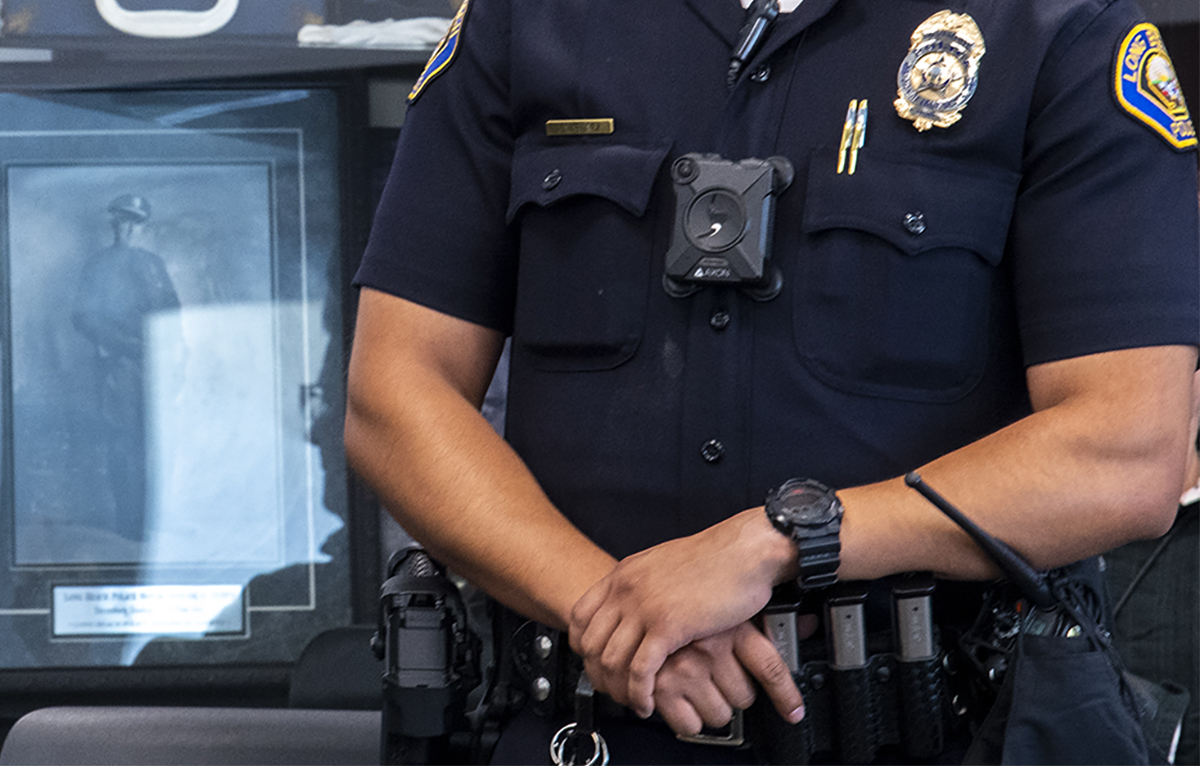
This means, for example, the department is banned from using AI to review body camera footage to flag possible misconduct by officers.
The agreement was a specific request by the police union, meant to provide a barrier of protection in an era where AI technology has rapidly permeated many professions, said Rich Chambers, president of the Long Beach Police Officers’ Association.
His request on behalf of the union did not come in response to any specific software, Chambers said, but the union generally opposes any means that would attempt to “encroach on the responsibilities of human employees.”
That could include any process that requires a supervisor to monitor body-worn camera footage or read reports to determine whether an officer acted appropriately in a certain encounter, Chambers said.
The agreement, which runs until September 2028, doesn’t outright ban the LBPD from using AI, but it requires the department to meet and confer with union representatives first.
Before any AI software is adopted by Long Beach police, there must be “thoughtful conversations about what these things look like and what the impacts will be,” Chambers said.
This comes as other departments — at least three in California — have started incorporating AI technology, although not for the evaluation of employees.
Police in Fresno, Chula Vista and Campbell all use AI software to help them write police reports. An AI program transcribes audio captured on body-worn cameras and writes them into an official police report.
Police officials in those departments say the technology has helped make their departments more efficient, allowing officers to complete reports more quickly so they can return to patrolling the streets.
Officers must still review the report and sign to attest that the AI-generated report accurately reflects the interaction it transcribed.
A state law passed last year requires police departments to publicly disclose if they are using AI software to help them write reports.
What else is in the contract
Long Beach’s new contract with its police officers includes raises that both sides say will help refill a department that currently has a 17% vacancy rate.
“This is an agreement that creates a great tool for us to be able to recruit as well as retain those officers,” said District 8 Councilmember Tunua Thrash-Ntuk.
Long Beach police officers will receive a 3% raise that takes effect this week, a 4% raise in October, and a 5% raise in October 2027.
“Long Beach can be a challenging working environment, and it’s even more challenging when we’re operating year after year at a staffing shortage,” Chambers said.
When new recruits join LBPD, Chambers said they need to be “able and willing to work extra shifts and overtime to cover our need to handle calls for service and keep the community safe.”
Although the contract runs through the end of the 2028 Olympics, Chambers said the police union did not make any specific requests related to the games.
Long Beach is hosting 11 Olympic events, including water polo, beach volleyball and sailing.
Chambers said he hopes to see the department close to fully staffed by the time the Olympics arrive. This week, the Los Angeles Police Department asked for nearly $100 million from the city to upgrade its radio network and buy around 500 vehicles and “mobile units” before the games arrive.
The federal government has earmarked $1 billion for Olympics security spending, but the agency in charge of doling out the money has not yet shared details on how local and state law enforcement can apply for those funds.