

Get this briefing in your inbox each week by signing up at LBPost.com/newsletters.
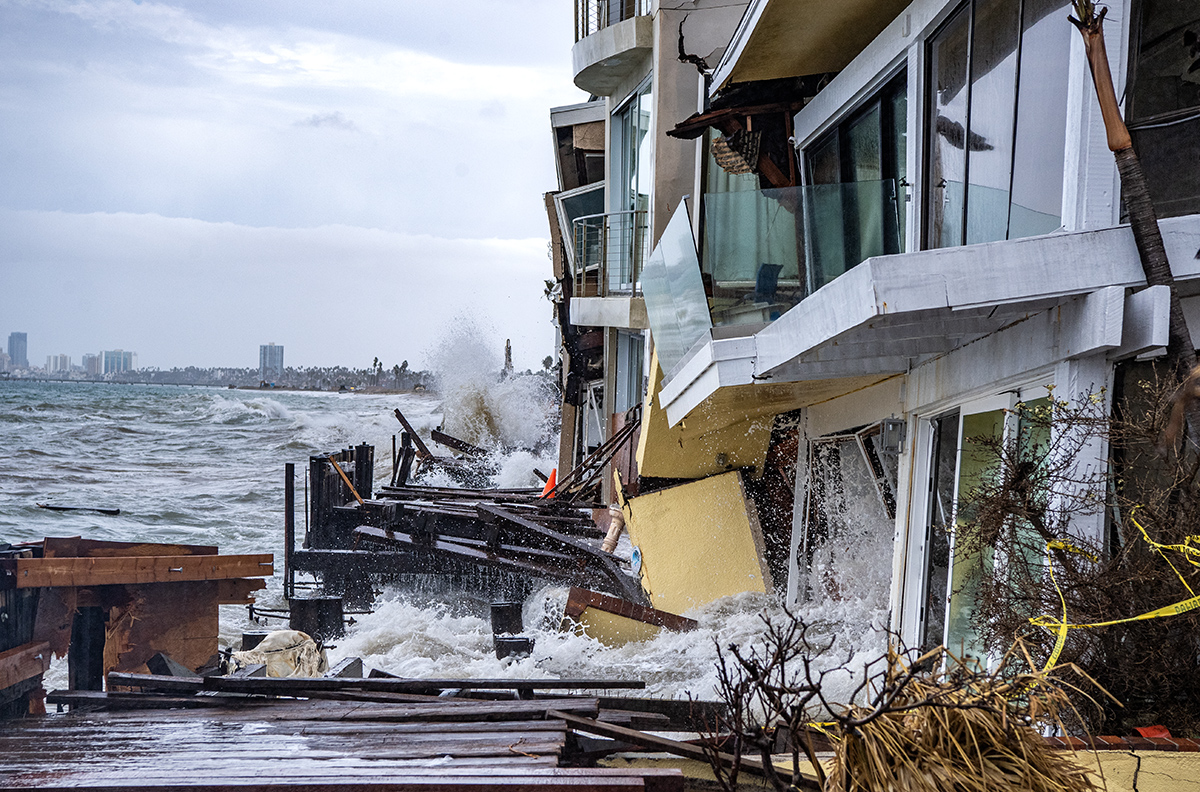
Houses ripped open and near collapse, a boardwalk left checkered with holes, and a beachfront vanished after powerful waves dragged its sand out to sea.
Time and again this year, rising seawater has made its presence known along a small stretch of land in Long Beach. A series of powerful storms sent supercharged waves atop swollen tides from the south, slamming into the city Peninsula, stripping away the sand and exposing a bulkhead buried for decades.
Seven Peninsula homes remain unlivable, and the beach that once cushioned them has needed massive amounts of city investment to be restored. On Tuesday, the Long Beach City Council will consider a number of new proposals that experts say are needed before the first of three King Tides arrives next week.
Together, the measures would continue the city’s emergency declaration in effect, loosen the limit on how quickly it can make repairs, raise the ceiling on its repair budget eightfold, and let the city grant emergency coastal permits itself instead of relying on the state Coastal Commission.
The Council approved a local emergency on Sept. 22 after damage from Hurricane Marie. City officials argue it must continue since conditions have not eased.
King Tides expected next week are forecast to reach about 8.23 feet — roughly as high as October’s record. To speed repairs, the city wants to temporarily lift its contracting rules for faster approvals (It also did something similar in 2023 for projects tied to its homelessness emergency).
Repairs first centered around patches of the bulkhead, beginning in mid-October, but have since grown to 1,000 linear feet after waves sent by Hurricane Rachel exacerbated the damage.

Other approvals Tuesday would allow the city to quickly issue emergency coastal permits in areas it controls, and to bypass bidding rules to contract with a single firm that it knows and has experience with the city seaport. Such work would ordinarily have to finish within 30 days, a regular permit application would be due within 90 days, and anything built would count as temporary since shoreline protection cannot become permanent without a full review.
Originally given a $1 million budget, City Manager Tom Modica is asking to raise the limit to $8 million, though officials say repairs should cost $3.6 million. The rest is a cushion, they added, so work can continue uninterrupted if another storm strikes, and they promise to return to Council with a funding plan before using the rest of the budget.
It’s been an expensive season already, with no signs of slowing. Public Works puts the total cost of storm response and projects at $17 million to $20 million or more; costs could exceed $24 million. About $9.5 million is committed or expected now: roughly $3 million in emergency response so far, $2.5 million for King Tide preparations and $3.5 million to $4 million for the bulkhead.
Permits are also in play to install a 700-foot line of boulders in the water, called a rock revetment, priced at $5 million to $7 million.
The city has $7 million left in emergency reserves and expects about $13 million from a surplus tied to high oil prices. It’s not proposing to use money from its general fund.
Federal reimbursement for erosion and wave damage is considered unlikely, and the city asked the state for help on Oct. 19.


Quick sips of the latest news
- City wants emergency order to open temporary homeless shelters: As renovations are underway at the city-owned 702 W. Anaheim shelter, the city is asking for emergency approvals to designate temporary sites for sheltering through next year without following local or state zoning rules or requiring future Council approval. The cost of this is unknown and depends on which sites are used, though the County is expected to pay for day-to-day operations. Whatever location is chosen would be staffed by People Assisting the Homeless, or PATH, which is paid by the county to provide intake, shelter, case management, showers, three daily meals and transportation help. This comes as demands for shelter continue in the city, with about 950 people referred in September.
- New gates, higher fees at El Dorado Park: Construction is set to start at the end of the month for a new gated, pay-to-exit parking system at the El Dorado East Regional Park and Nature Center. Crews will replace and expand the four entry gates, including two Wardlow Road gates that now serve only as exits, to relieve lines that at times back up onto the 605 Freeway. Crews will also add sidewalks at the Spring Street entrance and replace about 150 outdated signs with 93 new ones starting by the end of the year. The work follows about 7 miles of repaving and accessibility upgrades completed earlier. The roughly $11 million project is funded largely by a $10.2 million state grant. City staff are also proposing to raise daily parking fees to $8 on weekdays, $10 on weekends and $12 on holidays, and annual permits to $75, pending a Parks and Recreation Commission hearing in December.
- ‘Backbone Bikeway’ project breaks ground Wednesday: City dignitaries will celebrate the start of construction Wednesday on the Orange Avenue Backbone Bikeway. The project will add more than five miles of bike lanes, as well as protected intersections, upgraded traffic signals, crosswalks and bus boarding platforms to the busy north-south thoroughfare. It’s another major project that takes Long Beach another step closer to its vision of fewer cars — and fewer traffic deaths.
Helpful/interesting links
- Long Beach is burying its next 50-year time capsule. Residents wanting to submit an item for consideration have until Dec. 1 to file this online form. Anxious to know what was in the last one? Check out our coverage.
- It’s a busy schedule Tuesday for the Long Beach City Council. Check here for the most up-to-date agendas.
- We’ve launched a guide to help you prepare for a potentially historic El Niño rainy season. What else should we include? Hit reply and let me know.