

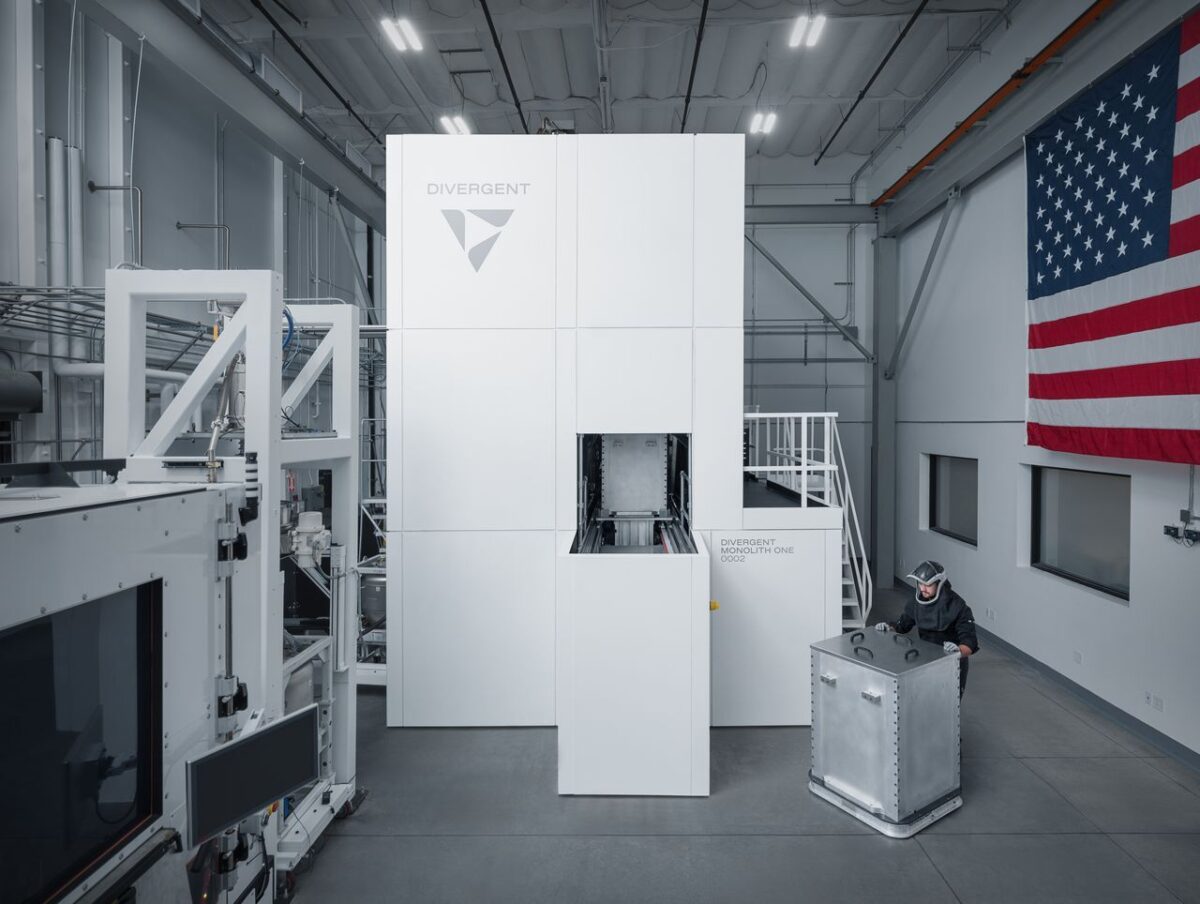
Divergent, a Torrance-based defense company that contracts with Raytheon and the U.S. Air Force to mass produce missile parts, announced last Friday it will expand to Long Beach with a second factory.
Using dozens of 3D printers they built in-house, called the Monolith One, the 430,000-square-foot facility will be capable of building 30,000 missile airframes or 60,000 warhead casings each year, depending on the needs of the Pentagon.
These parts are critical components for several military weapons, including the Tomahawk cruise missile.
The model of the company is to deliver more missile parts in a way that is faster and cheaper, reducing what traditionally takes years into weeks, months into days.
Lukas Czinger, chief executive and co-founder of Divergent, said in a statement that the new factory “represents the new industrial age at scale,” increasing its current production eightfold.
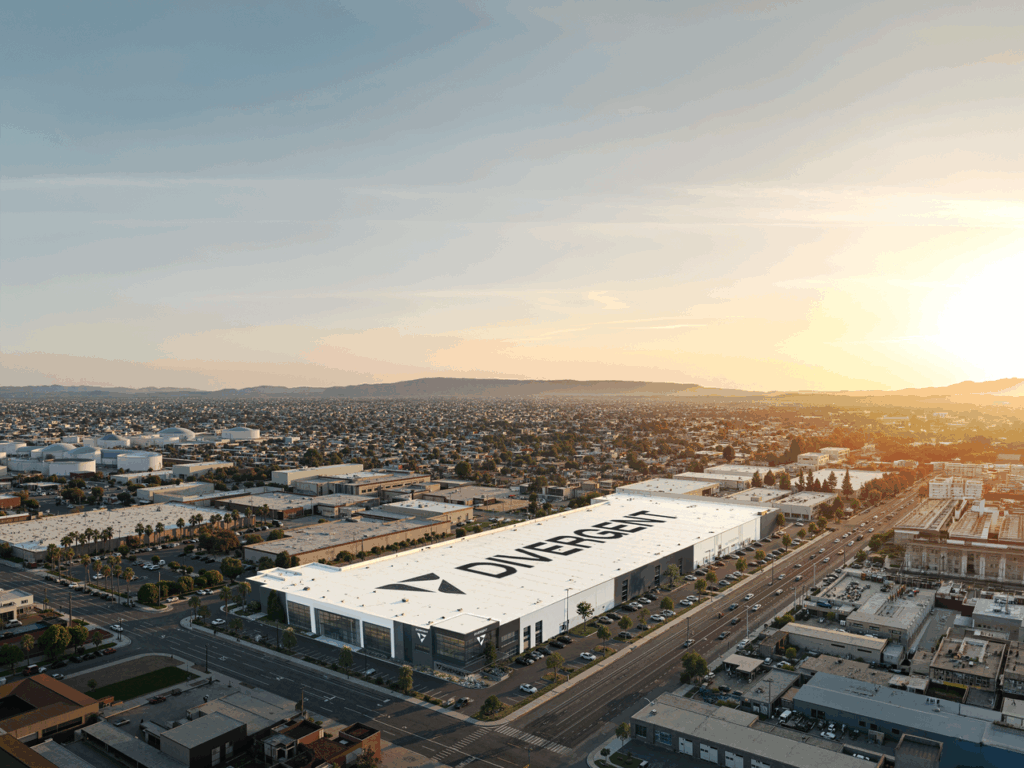
Details on the building’s construction, as well as its address and cost for the buildout, were not provided.
In a release, the company said the facility would add 1,000 local jobs. Nicole Ryan, a spokesperson with Divergent, said Thursday that staff have already begun moving into the facility, which they expect to come online by the end of the year.
Founded in 2014 and headquartered in Torrance, the company began with building car parts for luxury companies like Aston Martin, Bugatti and McLaren. In 2022, it pivoted toward aerospace and defense. Revenue quintupled in 2025, markedly by a boost in aerospace and defense contracts that now make 80% of their income.
“Three years ago, we said we’re really going to take this time to grow in defense,” Czinger said. “Today it’s really anchored by defense programs.”
Divergent is currently valued at about $2.3 billion and started the year with more than 500 employees. It holds contracts with dozens of aerospace and defense customers, including General Atomics, Lockheed Martin, RTX’s Raytheon and Triumph Group.
Its largest contract is with RTX’s Raytheon division, its defense arm, to build the midbody structure for the Tomahawk cruise missile, a sea-to-surface rocket with a 1,000-pound warhead.
Divergent is also under contract to build parts for Virginia-based CoAspire, as part of the Air Force’s Family of Affordable Mass Missile program, which is meant to quickly and cheaply replenish the U.S. stockpile after the military exhausted many of its munitions during Operation Epic Fury earlier this year.
It’s the latest in a wave of space, weapons and tech companies to join “Space Beach,” the 430-odd acres of industrial and warehouse space once used to build cargo planes outside Long Beach Airport.
In January, Anduril, an artificial-intelligence-backed weapons manufacturer, announced that it was building a $1 billion campus nearby to make drones and other A.I.-enabled weapons. Voyager Technologies, a missile defense and spacecraft supplier, opened a 140,000-square-foot facility down the street less than two months later. Other companies like Rocket Lab, Relativity Space, Vast, JetZero, SpinLaunch, and True Anomaly have built or expanded their business here in the city.
It’s an industry where successful businesses often curry favor with the federal government and military, and local representatives are eager to attract defense tech firms to create high-paying jobs.
These companies are in tight competition to take advantage of a growing national defense budget — $895 million in 2025 from $816 million in 2023 — while taking advantage of the large pools of talent near existing research and military facilities like JPL in Pasadena, Mojave Air and Space port in Kern County and Vandenberg Space Force Base.